Showing 326 results

Finding Aid
SDSU-Archives MA 059 · Collection · 13th century, 1440-1496 (Creation)

The H.M. Briggs Library holds five illuminated manuscript leaves, or single pages, consisting of religious texts dating from the 13th to the 15th centuries. One leaf is from the Biblia Sacra Latina (Vulgate Bible), handwritten on vellum and dating to the 13th century. It features wide margins, red and blue chapter numerals, historiated and illuminated initials, and intricate penwork ornamentation.

The remaining four leaves are from the Hours of the Virgin, a section of the Book of Hours, a devotional text widely used during the Middle Ages. These 15th-century vellum leaves originate from France, Flanders, and Paris, with one printed incunabula leaf produced by Philippe Pigouchet for Simon Vostre in 1496. The leaves include rubricated and historiated initials, decorative borders, and elaborate ornamentation in red, blue, and gold. The Hours of the Virgin, also known as the Little Office of the Blessed Virgin Mary, includes prayers, hymns, psalms, and lessons said at each of the eight canonical hours. The leaves were acquired from the estate of Morris Elmer Nellermoe, Jr. (1926–2004).

Nellermoe, Morris Elmer, Jr.
Jack Marken Papers
SDSU-Archives MA 090 · 1784, 1817, 1929-2005

The Jack Marken Papers document the professional, academic, and personal pursuits of Jack Marken, with particular emphasis on Native American literature, Indian education, and the works of British radical philosopher William Godwin. Spanning correspondence, research notes, publications, teaching materials, and organizational records, the collection offers insight into Marken’s interdisciplinary contributions to American Indian studies, literary scholarship, and humanities education.

Significant portions of the collection focus on Marken's engagement with Native American issues, including his work with the Association for Studies in American Indian Literature (ASAIL), Indian education initiatives, correspondence with Native scholars and institutions, and literature by and about Indigenous peoples, notably Sioux literature. Records reflect collaborations with federal and academic bodies such as the Bureau of Indian Affairs and the South Dakota Committee on the Humanities.

A major area of scholarly focus in the collection is Marken’s extensive research on William Godwin, including annotated bibliographies, manuscript revisions, critical reviews, correspondence, and rare materials related to Imogen, Political Herald, and A Pastoral Romance. The Godwin materials illustrate Marken's academic depth in Enlightenment and Romantic literary thought.

The collection also includes correspondence from students, colleagues, and notable figures; documentation of Marken’s lectureships and academic travel (e.g., University of Jordan); teaching files; SPICE (Summer Program in Cultural Enrichment) program materials; and involvement with various humanities initiatives.

The papers offer valuable documentation of cross-cultural education, literary scholarship, and humanities programming in the mid-to-late 20th century, especially as it intersected with Native American literature and higher education in South Dakota and beyond.

Marken, Jack W.
Robert F. Karolevitz Papers
SDSU-Archives MA 039 · 1833-2011

The Robert F. Karolevitz Papers document the life and work of a prolific South Dakota journalist, author, public speaker, and historian. Spanning the years 1833 to 2005, with the bulk of the material dating from 1910 to 1999, the collection offers comprehensive insight into Karolevitz’s personal life, professional writing career, civic activities, and historical research.

The collection includes personal files such as education records, family correspondence, financial and legal documents, memorabilia, and ephemera. These materials trace Karolevitz’s academic path through Yankton High School, South Dakota State College, and the University of Oregon, as well as his later roles as a public speaker and educator. Family records highlight several generations of the Karolevitz family, with photographs, commemorative materials, and genealogical documentation reflecting his strong ties to Yankton and Sacred Heart Catholic Church.

Professional files encompass manuscripts, published and unpublished writings, newspaper columns, speeches, advertising and political ghostwriting, and correspondence with publishers. Among the most notable works documented are Flight of Eagles, This Was Trucking, With a Shirt Tail Full of Type, and The Prairie is My Garden. Supplementary materials include book layouts, catalogs, and awards from institutions such as South Dakota State University, the South Dakota Newspaper Association, and Toastmasters International.

Karolevitz’s extensive research files span a wide range of historical subjects, including South Dakota and regional history, Catholic institutions, journalism, automotive culture, and American military history. These files contain clippings, correspondence, notes, pamphlets, and illustrations gathered in support of his writing and historical interests.

A major strength of the collection is its substantial photographic holdings, comprising thousands of prints, negatives, slides, and postcards. Subjects include early automobiles, farm equipment, American Indian communities, historic newspaper offices, Catholic parishes, World War I, and South Dakota towns and landscapes. These visual materials significantly enrich the documentation of regional culture and 20th-century American life.

Collectively, the Robert F. Karolevitz Papers form a rich resource for scholars of American regional history, journalism, Catholic heritage, and South Dakota’s cultural identity. The collection offers a deeply personal and professionally expansive view of one of the state’s most dedicated chroniclers.

Karolevitz, Robert F.
SDSU-Archives NA 001 · Collection · 1840-2006

The Norby Collection documents the history, development, and daily life of Brookings, South Dakota, and Brookings County, with limited coverage of South Dakota more broadly, from the late nineteenth century through the early twenty first century. Assembled by George and Evelyn Norby, the collection is organized into multiple series reflecting their sustained efforts to collect, compile, and preserve local historical documentation.

The collection includes extensive runs of the Brookings Register newspaper, providing long term coverage of local news, community events, politics, agriculture, business, and social life. Complementing the newspapers are compiled data files created by the Norbys that aggregate information drawn from newspapers and other local sources. These compiled records document city and county officials, elections, businesses, streets and addresses, homes and housing, churches, public services, cemeteries, schools, South Dakota State University buildings, and other aspects of municipal and community history.

Topical subject files form a substantial portion of the collection and include materials related to Brookings city and county government, organizations, churches, businesses, historic districts, education, South Dakota State University, named individuals, military service, railroads, public safety, cemeteries, and statewide topics. These files consist of clippings, publications, ephemera, maps, directories, reports, and reference materials and reflect both official activity and community life. Researchers are advised to consult both city and county subject groupings, as related material may appear in either.

The collection also includes a large body of directories, primarily telephone directories serving Brookings and surrounding rural areas, along with city directories, farm directories, regional directories, and campus directories for South Dakota State University. These directories document residents, businesses, institutions, and service areas over time. Ephemera within the collection includes business cards, envelopes, signs, calendars, bumper stickers, postcards, ribbons and badges, matchbooks, tokens, framed images, and other transient printed materials associated with local commerce, events, and organizations.

Materials related to the Norbys themselves document the acquisition, housing, processing, and public presentation of the collection, including South Dakota State University Archives records, Images of the Past program materials, and limited personal correspondence, photographs, and household items. Together, the series span approximately 1871 to 2006, with some undated material, and are arranged by series and subject to reflect the structure of the Norbys’ collecting activities.

Norby, George and Evelyn
W. Carter Johnson Papers
SDSU-Archives UA 053.068 · Papers · 1847-2017

The W. Carter Johnson Papers document ecological research and related professional activities from the 1960s through 2017, with most material dating from the 1970s through the 2000s. The collection is organized into subject and project groupings that reflect Johnson’s research program, including blue jay seed dispersal and nut caching studies, forest and tree ecology, prairie wetland ecology, and riparian vegetation research on major river systems. Records include field notes, data sets, statistical analyses, research proposals and prospectuses, conference materials, correspondence, photographs, slides, maps, and related publications and reprints.

A substantial portion of the collection focuses on blue jay mediated dispersal of acorns and beech nuts, including field notes dating from 1976 to 1989, data sets from Wisconsin, Virginia, and Iowa, banding records, artificial cache and germination data, and analyses of dietary responses to tannins and weevil infestation. Forest and tree ecology files address forest dynamics, succession modeling, regeneration and recruitment, biomass and carbon storage, and restoration case studies, with coverage of pine oak systems, disturbances such as ice storms, and seed dispersal in fragmented landscapes. Prairie wetland materials document long term study of prairie pothole wetlands, including hydrology, vegetation sampling, seed bank composition, and simulation modeling related to climate variability and climate change, with extensive site level data and photographs from locations such as the Deuel semipermanent wetland and the Severson Waterfowl Production Area.

Riparian and river focused research is represented through extensive Platte River documentation that includes multiyear monitoring and demographic studies of cottonwood and willow, GIS products, graphs, maps, field notes, reports, and large sequences of labeled slides spanning the mid 1980s through the early 2000s. Complementary river research files address the Snake River in Idaho, including Swan Falls related vegetation studies, sampling methods, progress reports, maps, photographs, and slides. Additional series document work on the Missouri River and other rivers and lakes, as well as international scientific exchange and translated materials concerning Soviet and Russian ecology. The collection also includes documentation of the Mortensen Ranch restoration work in South Dakota, including correspondence, interviews, project notes, awards, photographs, and guides related to rangeland and wooded draw restoration.

The W. Carter Johnson Papers documents ecological research methods and findings across multiple ecosystems, with notable depth in long term field data, modeling, and applied studies of seed dispersal, forest succession, wetland dynamics, and riparian vegetation response to regulated river flows. The collection supports research into late twentieth and early twenty first century ecological science, including the development and use of data sets, statistical procedures, GIS products, monitoring protocols, and longitudinal photographic documentation. These records also provide evidence of professional collaboration and scientific communication through proposals, conference participation, correspondence, and exchange activities, offering context for how ecological research informed management and restoration efforts in prairie, wetland, and riverine environments.

Johnson, W. Carter
Dan W. Johnson Papers
SDSU-Archives MA 041 · Papers · 1855-2002

The Dan W. Johnson Papers and Jeanne Johnson and Antiques Ltd. Records document the personal and professional lives of Dan and Jeanne Johnson, with a strong focus on their activities in Marshall, Lyon County, Minnesota. Spanning much of the 20th century, the collection reflects Dan Johnson’s career in journalism, public relations, and higher education, particularly his work at Southwest State University from 1969 until his retirement in 1981. It includes extensive newspaper clippings, correspondence, speeches, professional writings, campus directories, and institutional publications, much of it collected after retirement.

The collection also documents Johnson's earlier work as a newspaper editor, his service during World War II, and his post-retirement consulting work, most notably for Schwan’s Home Service, Inc. Records from Schwan’s include article drafts, internal correspondence, promotional materials, and photographs. Additional files highlight his community involvement through civic projects, local government initiatives, and regional journalism.

Personal and family materials are also significant in the collection, including correspondence, photographs, and memorabilia related to his children, grandchildren, and extended family. His military service is represented through wartime photos, placement letters, and related documents. Files on colleagues, friends, and educational institutions—such as the University of Minnesota and South Dakota State University—are present as well.

The Jeanne Johnson and Antiques Ltd. Records detail the operation of Jeanne Johnson’s antique business, including articles of incorporation, partner information, a personal planner, and clippings. The collection provides a community-based perspective on mid-to-late 20th-century life in southwest Minnesota, and offers research value in the fields of regional journalism, university public relations, civic engagement, and small business development.

Johnson, Dan W. 1917-2001
SDSU-Archives MA 019 · Papers · 1862, 1901, 1925-2021, undated

The Virginia Driving Hawk Sneve Papers document the literary career, research, and advocacy of the acclaimed Lakota writer, educator, and historian. Spanning from the 1960s to the 2020s, the collection includes manuscripts, correspondence, research materials, and published works that reflect her dedication to Native American storytelling and cultural preservation. It offers a comprehensive look at her contributions to literature, education, and Indigenous representation.

The Creative Writings series contains an extensive range of works, including Completing the Circle, The Medicine Bag, Dancing Teepees, Standing Bear of the Ponca, Sioux Women, and other significant titles. Each work is accompanied by manuscripts, clippings, correspondence, research notes, printer's galleys, proofs, reviews, and scripts. Many manuscripts include editorial annotations and suggested revisions, highlighting the development process of her works. Correspondence primarily consists of letters between Sneve and her publishers, as well as heartfelt messages from schoolchildren, some with drawings, thanking her for her books and school visits. Research materials within the series include notes, collected documents, and recorded interviews. The collection also includes a video adaptation of High Elk's Treasure.

The General series encompasses a broad spectrum of materials, including documentation of Sneve's various activities, honors, and awards, speaking engagements, clippings, interviews, journals, and diverse research materials. Her involvement in numerous boards, commissions, and cultural organizations is well documented, along with numerous honors such as the National Humanities Medal, Spirit of Crazy Horse Award, and recognition from educational and arts organizations across South Dakota and nationally. The speaking engagements reflect her role as a prominent public voice on Native American literature, history, and culture, featuring presentations at conferences, universities, museums, and festivals across the United States and internationally.

The Correspondence series features exchanges with publishing houses, fellow writers such as Bob Karolevitz and Audrae Visser, and political figures including Senator Larry Pressler. Of particular note is an audio reel of an interview Sneve conducted with Harold Shunk, a Bureau of Indian Affairs superintendent. The series also contains various teaching aids and historical photographs, including a 1901 class photo, adding depth to the collection's educational value.

The Other Writings series highlights Sneve's contributions beyond creative literature. This includes published articles, scripts for a South Dakota Public Radio series, Christian education resources produced for the Episcopal Church Center, newspaper editorials, studies related to the Flandreau Indian School, and her contribution to On the Wings of Peace, a compilation benefiting world peace organizations. These materials showcase her engagement with broader educational and social issues within and beyond Native communities.

This collection serves as a significant resource for researchers, scholars, and educators studying Indigenous literature, storytelling, and cultural history. It offers insights into Native identity, advocacy, and representation, highlighting Virginia Driving Hawk Sneve's enduring impact on Native American literary and educational landscapes.

Sneve, Virginia Driving Hawk
Charles L. Sewrey Papers
SDSU-Archives UA 053.010 · Papers · 1862-1973

This collection documents the academic, intellectual, and scholarly pursuits of Dr. Charles L. Sewrey, professor of history at South Dakota State University. The materials span from 1862 to 1973 and are composed of collected publications, correspondence, manuscripts, photographs, and published articles primarily related to Sewrey's research interests in anti-Catholicism, American religious and political culture, and frontier life in Minnesota.

The collected material includes newspaper clippings, pamphlets, Socialist Party literature from the 1960s, and an 1862 volume of Aurora Leigh and Other Poems by Elizabeth Barrett Browning. Also present is a significant file on the Steven Truscott case (1966–1969), which explored the wrongful conviction of a Canadian youth. These materials were likely used in support of research and teaching.

The general materials consist of correspondence, course notes, and exams from Sewrey’s history courses, as well as miscellaneous ephemera including photographs and a map depicting the Lake District near Alexandria, Minnesota.

The manuscripts form the core of the collection and reflect Sewrey’s research into anti-Catholicism and religious controversy in American history. Notable among these is his master’s thesis, The Protestant Minister in Frontier Minnesota, written in 1946, which is represented in multiple chapters and outlines both the private and public life of religious leaders on the Minnesota frontier. Additional manuscripts examine topics such as Cold War foreign policy, sectarianism on the frontier, U.S. religion and morality, and the development of land grant colleges. A substantial portion of the manuscripts consists of an extensive, untitled book-length work covering the historical origins, controversies, and social implications of anti-Catholic thought in the United States.

The published works (1945–1973) include academic journal articles, book reviews, and newspaper opinion pieces authored by Sewrey. Prominent among them are articles in The Christian Century, Journal of Church and State, and The Unicorn. Several of these writings focus on anti-Catholic rhetoric, communism, political philosophy, and civic education. The collection also includes transcripts of two broadcasts from Sewrey’s appearances on Professor’s Forum, a program aired by the South Dakota State College radio station.

The Charles L. Sewrey Papers offer insight into the study of anti-Catholic sentiment in American history and the intersection of religion, politics, and public life on the frontier. Sewrey’s research, particularly his analysis of Protestant ministry in Minnesota and his broader writings on religious controversy, contributes to a deeper understanding of sectarian dynamics in the United States. His work engages with key themes in mid-20th-century political thought, moral philosophy, and Cold War-era ideology. In addition, the collection reflects the academic output of a historian actively involved in teaching, public scholarship, and civic discourse at a land-grant institution, making it a valuable resource for scholars exploring American religious and intellectual history, education, and the public role of the historian.

Sewrey, Charles Louis
SDSU-Archives MA 044 · Papers · 1863-1870, 2006

This collection consists of transcriptions of the diaries of Susan A. Jones, completed in March 2006 by her great-granddaughter, Virginia Vander Wal. The diaries, written between 1863 and 1870 while Jones resided in Massachusetts and Wisconsin, document her daily life, including social events, weather observations, work, and notable occasions such as funerals, religious milestones, and her engagement.

The 1863 diary, written prior to her marriage to Henry R. Jones, contains several references to the Civil War. The original materials vary in format, with some entries on fragile loose pages and others in small bound diaries with compact, often faded handwriting. Transcription challenges are noted in the text, including illegible sections marked with blanks and uncertain words placed in brackets. The original spelling has been preserved.

Virginia Vander Wal also contributed genealogical background, an account of the transcription process, and personal notes marked in boldface. Supplementary materials include a photocopy of Susan A. Jones’s portrait and Henry R. Jones’s military discharge papers. The diaries are incomplete, with gaps in daily or monthly entries across some years.

Jones, Susan A. 1844-1925
John E. Miller Papers
SDSU-Archives UA 053.015 · Papers · 1865-2020

The John E. Miller Papers document the academic, professional, and scholarly contributions of Dr. John E. Miller, longtime faculty member in the Department of History at South Dakota State University. The collection includes course materials, oral history interviews, public talks and presentations, manuscripts, published works, and extensive research files. The bulk of the collection centers on Miller’s nationally recognized work on Laura Ingalls Wilder and Rose Wilder Lane, but also reflects his broader research interests in American history, democracy, political culture, and Midwestern small-town life.

The general material series includes correspondence, photographs, awards, articles about Miller, and records of his involvement with organizations such as the South Dakota Humanities Council, South Dakota State Historical Society, Phi Kappa Phi, and the Midwestern History Association. Course materials reflect Miller’s teaching of U.S. history, South Dakota history, American political thought, and Osher Lifelong Learning Institute courses following his retirement. Talks and presentations span decades of academic conferences, workshops, and public panels, including participation in the Dakota History Conference and Laurapalooza.

The interviews series includes oral histories with figures such as George McGovern and John Wooden, as well as SDSU faculty and administrators. Early recordings were created on audiocassette and later on digital media; some are accompanied by transcripts and release forms. The writings series includes manuscripts, book proposals, article drafts, encyclopedia entries, and collaborative works. Sixteen boxes are devoted to Miller’s research and writing on Laura Ingalls Wilder and her family, comprising handwritten notes, research from archival sources, critiques of other Wilder scholars, and drafts of his own publications.

Miller’s research files cover a wide range of historical figures and topics such as democracy, elections, U.S. and South Dakota history, creativity, and popular culture. Subject files include material on Johnny Carson, Walt Disney, Sam Walton, and Lawrence Welk, as well as materials related to his books Looking for History on Highway 14 and South Dakota State University: A Pictorial History, 1881–2006. Also included are Brookings County historical research drawn from the Donald D. Parker Collection; materials related to the Brookings County Democratic Party donated by Ruby Mershon; and artwork and records concerning Hubert B. Mathews and Hubert Jean Mathieu.

Audiovisual and digital content includes 231 audiocassettes, 10 digital recorders, 17 CDs, 1 DVD, 18 USB flash drives, 24 SD cards, and born-digital materials. These recordings document interviews, lectures, and research materials gathered over the course of his career.

This collection is especially valuable for its preservation of the scholarly legacy of one of South Dakota’s foremost historians. Miller’s research on Laura Ingalls Wilder contributed significantly to American literary and cultural history, and his oral histories and writings provide rich documentation of South Dakota’s political, educational, and social landscape. The materials reflect the intellectual and civic life of the region, while also offering insight into the historian’s role as teacher, writer, and public scholar. The breadth and depth of this collection make it an essential resource for the study of Midwestern identity, public history, American democracy, and the institutional history of South Dakota State University.

Miller, John E. 1945-2020
Neva Whaley Harding Papers
SDSU-Archives MA 130 · Papers · 1868-1987

The Neva Whaley Harding Papers, curated by Jane Alexander, offer a comprehensive exploration of Neva's life, family heritage, and community engagement. The collection is composed of various mediums like manuscripts, correspondence, interviews, certificates, diplomas, and audio recordings, providing insights into Neva's life from her formative years to later life stages.

This collection documents the personal, academic, and domestic history of Neva M. Whaley Harding—a South Dakota homesteader, educator, and writer—and her husband, Albert Spencer Harding. Topics covered include personal experiences, family history, genealogy, education, community involvement, and social issues. Materials include autobiographical writings, manuscript drafts, photographs, certificates, and a substantial body of correspondence with family, friends, and historians.

Of particular value are interviews recorded on open reel audiotape, which delve into Neva’s personality, philosophy, and life experiences, including reflections on events such as the Great Depression and the World Wars. Her manuscript I Recall Pioneer Days in South Dakota and associated research and editorial materials provide first-person insight into settler life and rural womanhood. The collection also includes documents from Neva and Albert’s time at South Dakota Agricultural College, illuminating aspects of college life in the early 20th century.

Through Jane Alexander's efforts, the collection serves as a testament to Neva's legacy and her influence on both her family and her broader community. It offers valuable primary source material for researchers studying women's history, South Dakota heritage, and intergenerational memory.

Harding, Neva Marie Whaley, 1872-1978
Charles F. Gritzner Papers
SDSU-Archives UA 053.029 · Papers · 1871-2014

The Charles F. “Fritz” Gritzner Papers span 1871 to 2014 and document his career in geography and geographic education, including teaching, service to professional organizations, curriculum and standards work, and outreach to K–12 educators. The collection contains annotated calendars (1987 to 2008), professional activity and experience lists (1984 to 2009), an honors and awards list (1980 to 2010), and phone, letter, and activity logs covering 1979 to 2006. Awards and recognition are represented through certificates and plaques, including the South Dakota State University Distinguished Professor plaque (1993) and additional teaching and service awards.

The collection includes substantial organizational records from the Association of South Dakota Geographers and Planners dating primarily from 1981 to 1990. These files include constitutions and bylaws, mailing lists, newsletters and newsletter items, presidential notebooks, and related administrative records, as well as materials associated with the GIFT (Geographic Information For Teachers) program. Extensive records of the National Council for Geographic Education span the 1960s through 2011 and include minutes, executive board agendas, constitution and governance materials, officer and committee files, membership documentation, newsletters, reports, correspondence, planning calendars, publications, and historical data, including a file on Gritzner’s involvement with the organization.

Geography standards and social studies materials document work on national and state standards and related curriculum efforts. These files include publications such as Geography for Life: National Geography Standards (1994), guidelines for geographic education, national assessment framework materials, documentation of other states’ standards, and South Dakota geography standards files dating from the 1990s into the 2000s. Additional standards-related records include working papers and resource materials spanning multiple decades.

A large portion of the collection documents the South Dakota Geographic Alliance and its programs from the late 1980s through 2011. These records include administrative, grant, budget, and fundraising files; correspondence; newsletters; meeting files; teacher lists; institute and workshop materials; evaluations; field trip documentation; and materials related to Geography Awareness Week. Program files also cover teacher-focused offerings such as summer geographic institutes, seminars, and short courses, and include extensive documentation related to Advanced Placement Human Geography initiatives, including promotional materials, teaching packets, course descriptions, and institute records. Related materials include student correspondence and ephemera associated with “Adventures with Boov,” along with photographs and a photo album.

South Dakota Geographic Bee materials span 1987 to 2013 and include media coverage, participant and program files, winners lists, and annual state-level competition kits from 1989 through 2013, as well as later archival and history files. Additional topical groupings include records related to the Rocky Mountain Region Japan Project, including correspondence, course materials, newsletters, resource files, and travel documentation.

Instructional materials document geography courses and teacher training offerings and include syllabi, exams, lecture notes, handouts, and reference files for subjects such as climatology, conservation, Latin America, the Caribbean, and other regional and thematic topics. Research files are extensive and organized by geographic region and subject area, with materials spanning the mid-twentieth century through the 2000s and including maps, clippings, tear sheets, correspondence, and reference literature. Writings and publishing files include drafts, proofs, correspondence, and agreements for works produced for a range of publishers and projects, including contributions associated with “Panorama” and book-length and instructional publications.

Visual materials consist largely of slides, with sets documenting geographic regions, landforms, maps, travel, and instructional topics, including both undated groupings and dated series from the 1960s through the 1990s. Photographs and related visual documentation are also present within program files and outreach activities. Together, the records provide documentation of geographic education initiatives, professional service, instructional practice, and related research and publishing activity.

Gritzner, Charles F.
SDSU-Archives UA 048 · Collection · 1878, 1910-2023

South Dakota State University was established in 1881 as Dakota Agricultural College, with its first permanent building, later known as Old Central, completed in 1883. As the institution expanded in the early twentieth century, additional academic and administrative structures were constructed, including Lincoln Hall in 1927 and the Coughlin Campanile in 1929, which became a defining architectural landmark of the campus. Over subsequent decades, the university added facilities to support engineering, agriculture, research, student life, and athletics, reflecting steady institutional growth from a land grant college to a comprehensive university. Historic buildings such as Old Central, Lincoln Hall, and the Coughlin Campanile stand alongside later additions including research laboratories, residence halls, and athletic venues, illustrating successive phases of campus development.

This artificial collection consists of assembled materials related to the buildings and landmarks of South Dakota State University. Developed over time from departmental files, staff contributions, and individual donations rather than through a formal records transfer process, the collection varies in scope and completeness. Materials span from the late nineteenth century to the present and document construction, renovation, maintenance, and commemorative activities associated with campus structures. Records include architectural plans, capital outlay reports, budget data, blueprints, specifications, maintenance files, dedication programs, and anniversary materials. Buildings represented include academic halls, agricultural and research facilities, libraries, residence halls, student unions, athletic venues, and landmark structures. The collection documents the physical growth of the campus and the evolution of its infrastructure across multiple generations.

South Dakota State University
N. E. Hansen Papers
SDSU-Archives UA 053.004 · Papers · 1879-2004

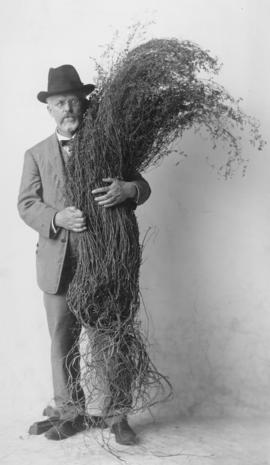
The N. E. Hansen Papers document the life, career, and plant exploration work of Niels Ebbesen Hansen (1866–1950), a horticulturist, botanist, explorer, and professor at South Dakota State College. Hansen was renowned for developing hardy fruits and forage crops suited for the Great Plains, and this comprehensive collection spans from the late 19th to the mid-20th century, reflecting his pioneering plant-breeding research and global botanical expeditions.

The collection includes correspondence, field notes, manuscripts, publications, journals, plant specimens, photographs, and research files. Early field notebooks and ledgers document Hansen's experimental work in alfalfa, clovers, and grains at the South Dakota Agricultural Experiment Station. Plant introduction records from Russia, Siberia, Turkestan, and China are extensively represented through travel logs, USDA contracts, expense reports, and photographs. Plant specimens and related horticultural data span multiple decades and continents, offering insight into his breeding strategies and selection processes.

Hansen’s manuscripts and publications explore topics such as breeding for cold resistance, disease tolerance, ornamental and edible plant development, and his views on Soviet agricultural practices. Of particular note are his multi-part manuscript series “Russian as Observed by an Agricultural Explorer” (1934–1937), which offers a critical and highly detailed commentary on Soviet collectivization, agrarian policies, and scientific developments. Numerous addresses and lectures document his national and international engagements with scientific and farming communities, including the Dry Farming Congress and State Horticultural Society.

Extensive correspondence from 1873 to the 1940s details his professional relationships with fellow horticulturalists such as Luther Burbank, institutional partners like the USDA, and international contacts including Soviet agronomist N.I. Vavilov. Clippings and biographical files document his recognitions, public reputation as the “Burbank of the Plains,” and memorials in his honor, including his 1949 South Dakota State College tribute and posthumous induction into the South Dakota Hall of Fame.

Photographs in the collection provide vivid documentation of Hansen’s expeditions, including images of him and his assistants in Manchuria, Siberia, and the Da Hinggan Mountains searching for hardy fruits. Other images depict South Dakota State College greenhouses, plant displays, and early experimental plots. Journals from his student years (1879–1883) and professional career reflect his early interests and scientific development.

This collection is a resource for studying early 20th-century plant exploration, American-Soviet agricultural exchange, Great Plains horticulture, and the role of land-grant institutions in shaping regional agricultural adaptation and innovation. Hansen’s impact on food systems, especially through breeding hardy fruits, grasses, and legumes, continues to influence breeding programs worldwide.

Hansen, N.E. (Niels Ebbesen), 1866-1950
Hawley-Lothrop Family Papers
SDSU-Archives MA 065 · Papers · 1879-2002, undated

This collection consists of photographs, albums, certificates, scrapbooks, printed materials, and personal memorabilia documenting the Hawley and Lothrop families, along with related individuals and organizations connected to Brookings and Huron, South Dakota, from 1879 to 2002. Materials include family photographs and portrait albums, such as two Hawley family photograph albums containing studio portraits and individual images, as well as loose family photographs and a written Hawley family history by Jean Lothrop. Additional family-related materials include a baby book for Lucille Lothrop with photographs, a scrapbook documenting the death of Lucille Lothrop containing condolence and sympathy cards, and personal correspondence addressed to Jean and Eugene.

The collection also contains items reflecting educational, civic, and social activities in South Dakota. These include certificates and memorabilia associated with South Dakota Agricultural College, such as a commencement invitation from 1897, a transcript issued to William H. Walters in 1900, a reunion button, and anniversary and reunion certificates. Other materials include a municipal reform paper written by William H. Walters, a postcard album containing photographic postcards, and a scrapbook documenting the activities of the International Organization of Odd Fellows through newspaper clippings and photographs. Additional photographs depict individuals including E. and M. Hawley and locations such as the ruins of the Royal Hotel in Huron, South Dakota.

The materials provide insight into family life, education, civic engagement, and social organizations in South Dakota from the late nineteenth through the twentieth centuries. Family photographs, albums, and written histories document genealogical connections and domestic life, while items associated with South Dakota Agricultural College and local schools illustrate the educational experiences of early students and alumni. Scrapbooks and organizational materials, including those of the International Organization of Odd Fellows, reflect the role of fraternal and community organizations in regional social life. Collectively, the collection contributes to the study of local history, family networks, and community institutions in South Dakota across multiple generations.

Hawley-Lothrop Families
Robert F. Kerr Papers
SDSU-Archives UA 053.006 · Papers · 1881-1931

The Robert F. Kerr Papers represent a compilation of Kerr’s personal and professional materials, primarily dating from the 1880s to the 1930s. The collection is composed predominantly of correspondence, both personal and related to Kerr’s role at South Dakota State University (then Dakota Agricultural College). Notable within this correspondence are letters documenting Kerr’s dismissal from the university, offering insight into early administrative and academic tensions at the institution.

In addition to correspondence, the collection includes class records (1885–1892), diaries (1886–1888), and writings by Kerr on a variety of topics including Brookings County history, college history, and Jewish advocacy. A unique item is Kerr’s contribution to the History of SDSC: 1881–1931, which includes marginalia in Chapter 1 authored by Kerr. Additional materials include a certificate of public instruction, scrapbook, notes, ledger, traveling papers, and maps/manuals of South Dakota. A Christmas greeting composed by Kerr and multiple drafts of personal reflections, including an autobiographical sketch, further illustrate his personal beliefs and public engagement.

The collection documents Kerr’s broad intellectual interests, educational work, and his role in shaping the early academic life at South Dakota State University. The presence of early class materials and student-related documents adds to the understanding of instructional methods during the foundational years of the institution.

Robert F. Kerr was a foundational figure in the academic development of Dakota Agricultural College. His personal files provide critical documentation of institutional history, early university governance, and student instruction practices. The correspondence surrounding his departure adds to the narrative of university leadership and faculty relations in the institution’s formative years. His historical writings on South Dakota and Brookings County contribute to regional history.

Kerr, Robert F. (Robert Floyd), 1850-1921
James Pollock Papers
SDSU-Archives MA 131 · Papers · 1881-2024

The James Pollock Papers document the life, art, and contributions of South Dakota artist James Pollock, with a particular focus on his involvement in the U.S. Army's Combat Art Teams (CAT) and his artistic works related to the Vietnam War. The collection encompasses a wide range of materials, including notes, interviews, reports, articles, photographs, and sketches, offering a detailed look at Pollock's creative process, his military experiences, and his artistic evolution both during and after his service. A central component of the collection highlights Pollock's role in the Combat Art Teams, which aimed to capture the realities of war through visual art. His contributions span various phases of the Vietnam conflict and also includes material of other Combat Artist Team military assignments in locations such as Korea, Thailand, Germany, Alaska, and Panama.

The collection features numerous original ink sketches that showcase Pollock's distinctive style and his evolving artistic vision over the years. These works cover a broad range of subjects, from wildlife and landscapes to human figures, frequently drawing inspiration from his South Dakota heritage. In addition to his war-related art, Pollock's work has been exhibited in venues such as the Indianapolis Exhibit and the Robinson Museum in Pierre, South Dakota. Articles and press releases from publications like South Dakota Magazine and Vietnam Magazine document his artistic impact, highlighting the significance of his contributions to both military and civilian audiences.

Correspondence within the collection reveals Pollock's interactions with a diverse group of individuals, including political figures, fellow artists, military personnel, and veterans. These letters provide valuable insight into the professional and cultural networks that supported Pollock's artistic endeavors.

Beyond his military and war-related art, the collection includes Pollock's personal projects, such as his illustrations for Blood on the Killdeer by Dana Close Jennings, as well as his involvement in South Dakota's Centennial and Bicentennial celebrations. His engagement with the public is further reflected in materials related to his participation in art forums for veterans. The collection also documents Pollock's media presence, including his web site, articles, and video content, which showcase his outreach efforts to veterans and the broader public.

Overall, the James Pollock Papers offer a comprehensive portrait of an artist whose work bridges military history, cultural heritage, and personal expression, underscoring the enduring impact of his artistic contributions.

Pollock, James, 1943-
Vera Way Marghab Papers
SDSU-Archives MA 025 · Papers · 1883-1998

The Vera Way Marghab Papers is a comprehensive archive documenting the life and work of a woman who played a significant role in the luxury textile industry. The collection offers insight into her personal journey, from her early years in South Dakota to her time as a piano student in New York City, as well as her relationship with Emile Marghab through extensive correspondence. While much of the material is centered on her personal life, the collection also reflects her role in the linen industry as the driving force behind Marghab, Ltd. and Emile Marghab, Inc. The records highlight her meticulous nature, as she preserved extensive documentation on both her personal and professional endeavors. Given the interwoven nature of her life and career, the materials are arranged into distinct series that provide a structured approach to understanding her legacy.

The Business Series encompasses all aspects of the Marghab enterprises, both in New York and Madeira. It includes materials on the founding of the company, capturing the vision and strategy behind Emile and Vera's business model, as well as its eventual dissolution. Correspondence reflects their relationships with artisans, business partners, and shop managers, while records on design illustrate Vera's influence in maintaining the highest standards of quality. Trademark and copyright documents, including coded correspondence aimed at protecting proprietary designs, shed light on the competitive nature of the textile industry. One of the aspects of this series is the material related to the Mayflower cloth, a specially designed tablecloth for the 1957 Mayflower II voyage, which later became an exhibition piece at the World's Fair in Australia. Administrative records from the New York and Madeira operations provide insight into the governance and structure of the business, including shareholder meetings, factory logistics, and high-profile engagements with diplomats and the U.S. Navy. Employee records detail the hiring process, disputes, and pension plans, while financial records illustrate the company's fiscal health, including instances of embezzlement and tax matters. The marketing strategy developed by Vera is well-documented, with strict guidelines for Marghab Shops, controlled advertising, and policies that set the company apart from competitors. Records on the shops provide a glimpse into Vera's selective approach, including her direct correspondence with store managers and evaluations of potential retail locations.

The Personal Series reflects Vera's multifaceted life beyond her business endeavors. Materials include portraits and fabric samples that visually represent her legacy. Her commitment to philanthropy is evident in records of charitable donations and correspondence with organizations she supported. A large portion of the series consists of clippings and collected materials, which demonstrate her curiosity and engagement with various subjects. Personal correspondence includes letters to and from family, friends, and colleagues, some of which intersect with business matters. Financial records cover her personal wealth management, including investments, estate planning, and legal affairs. The series also includes materials on her life in Madeira, providing additional context to her time spent there beyond the confines of business. The establishment of the Marghab Gallery at the South Dakota Art Museum is well-documented, capturing her dedication to preserving the artistry of Marghab linens. Music played an important role in Vera's early life, and materials on her musical education and performances offer insight into this passion. Personal writings, including reflections and philosophical musings, provide a more intimate look at her character and outlook on life.

Significant figures in Vera's life are highlighted through correspondence and clippings, most notably her husband, Emile, and her immediate family. Her engagement with politics is documented through materials on political figures and organizations of interest to her. Rare book records illustrate her scholarly interests and her contributions to South Dakota State University's library. Recognition for her contributions to the textile industry and beyond is captured in awards, articles, and documentation of a Marghab video project. Social engagements and affiliations with arts organizations further reflect her cultural involvement. Her extensive travels, both domestic and international, are documented in travel records, revealing her connections to a broader global network. Her deep ties to Watertown, South Dakota, are evident in materials related to her home, Wayland, and her properties on Lake Kampeska, as well as documentation on community events and restoration projects.

This collection is of exceptional significance, offering researchers a rich narrative of a woman who was both a cultural tastemaker and a shrewd business leader. It captures the evolution of a company that set new standards in luxury linens, the meticulous approach that defined its success, and the challenges it faced in an ever-changing economic and political landscape. Equally important, it provides a deeply personal portrait of Vera Way Marghab, allowing scholars to explore the intersections of entrepreneurship, artistry, and personal ambition. The collection stands as a valuable resource for those interested in business history, women's history, textile design, and the legacy of craftsmanship that Marghab linens represent.

Marghab, Vera Way, 1900-1995
SDSU-Archives MA 049 · Collection · 1884-2000

The David Richards Collection on N.E. Hansen documents the extensive horticultural work and plant exploration of Niels Ebbesen Hansen (1866–1950), a pioneering plant breeder and professor of horticulture at South Dakota State College. Hansen was known for introducing hardy fruits, ornamental plants, and forage crops suitable for the Northern Great Plains. David Richards, a long-time admirer of Hansen, frequently visited him in his office. Following Hansen’s death in 1950, Richards received permission to preserve several items and salvaged numerous documents otherwise destined for disposal. These materials form the basis of this archival collection.

The collection includes Hansen’s bulletins and circulars for the South Dakota Agricultural Experiment Station, manuscripts and article drafts containing his handwritten notes and corrections, and correspondence with colleagues, friends, and customers interested in plant orders. Also present are catalog descriptions prepared for seed catalogs, transplanting cards documenting the propagation of hybrids, and research reports to the Agricultural Experiment Station and South Dakota State Horticultural Society. Additional materials include clippings, photographs, collected Russian publications, travel notes, international journals, seed catalogs, and multiple volumes of Seeds and Plants Imported from the U.S. Department of Agriculture. Subjects covered in Hansen’s writings span apples, crabapples, apricots, cherries, currants, grapes, pears, plums, roses, alfalfa, trees, and topics in plant genetics and breeding.

Richards, David
SDSU-Archives UA 009 · Records · 1884-2008

The Family and Consumer Sciences Records document the development, administration, academic programming, and public engagement of the College of Home Economics and its successor, the College of Family and Consumer Sciences, at South Dakota State University. Spanning the early 20th century through the college’s reorganization in the early 21st century, the records include curriculum materials, committee minutes, faculty resources, newsletters, brochures, workshop materials, program evaluations, and student organization records. Key topics include the establishment and evolution of the core curriculum, graduate programs, student and faculty achievements, and community outreach such as the SDSU Laboratory Preschool and the Brookings County Youth Mentoring Program.

Historical documentation includes comprehensive narrative histories compiled by faculty and alumni, alumni newsletters, and self-study reports. The collection also contains annual and biennial reports, federal reports submitted to the U.S. Department of Health, Education, and Welfare, and documentation of special initiatives such as nutrition education, early childhood development, and Native American student engagement. A large body of photographs—both loose and from dismantled scrapbooks—depict faculty, students, events, facilities, and departmental activities across decades.

Included are portraits of deans, building plans, program brochures, and thesis titles from across the United States, reflecting the college’s academic and national context. Records from the post-1990s period also trace the administrative transition of the college and its departments into broader units within SDSU, particularly the School of Health and Human Sciences and the Ness School of Management and Economics.

This collection documents the evolution of home economics education in South Dakota, particularly at a land-grant institution. As one of the earliest such programs in the nation, SDSU’s Department of Home Economics (later the College of Family and Consumer Sciences) played a pivotal role in expanding educational and professional opportunities for women, promoting applied science, and integrating academic programs with community service. The records provide valuable insight into changes in curriculum, pedagogy, gender roles, and public health priorities from the late 19th century through the early 21st century. They also chronicle the institutional reorganization and broader trends that led to the dissolution of the college and the integration of its programs into new interdisciplinary structures.

South Dakota State University. College of Family and Consumer Sciences
SDSU-Archives UA 052.03 · Records · 1884-1895

This collection is composed of original records of the Dakota Agricultural College Board of Regents, documenting foundational governance activity between 1884 and 1895. It includes a ledger of official minutes detailing key decisions and organizational structures during the college's formative years. Topics covered include the selection of the first president, establishment of committees to oversee academic programs, finances, building construction, land management, and admissions. The ledger also records the development of early budgetary and curricular frameworks, with later entries incorporating presidential reports. A notation at the conclusion references a second volume of minutes, but its location is currently unknown.

Additionally, the collection contains a petition signed by students, requesting the dismissal of an English/History professor—offering early evidence of student engagement with faculty performance and governance.

These records offer critical insight into the early administrative and academic formation of South Dakota State University during its era as Dakota Agricultural College. The materials illustrate the priorities and challenges of a newly established land-grant institution in the late 19th century, highlighting student activism, governance practices, and institutional planning. The collection is especially significant for scholars interested in the history of higher education in South Dakota, land-grant college governance, and student-faculty relations in early American universities.

Dakota Agricultural College Board of Regents
SDSU-Archives UA 022 · Records · 1884-2011

This collection contains records created and maintained by the Office of Records and Registration, documenting its core functions in academic scheduling, student enrollment tracking, commencement planning, and coordination with academic departments. The bulk of the collection consists of comprehensive course schedules spanning decades, catalogs, commencement programs, and enrollment statistics. Also present are short course circulars, committee meeting minutes (including the Committee of Deans and the Committee on Entrance Requirements), administrative correspondence, procedural manuals, and national reporting data such as IPEDS. The collection also includes records related to software implementation (DataTel STUDENT) and various guides related to registration and student services.

These records offer insight into the administrative and academic operations of South Dakota State University, particularly in how course offerings, student registration, and academic policies evolved over time. They are essential for understanding the university’s response to changing educational needs, technological advancements in registration systems, and national trends in enrollment and reporting. This collection supports research in institutional history, higher education administration, curriculum development, and student services.

South Dakota State University. Office of Records and Registration
J. P. Hendrickson Papers
SDSU-Archives UA 053.020 · Papers · 1885-2000

The J.P. Hendrickson Papers are composed of material collected by Hendrickson in connection with his work on constitutional reform in South Dakota and his contributions to local government in Brookings. The collection spans from 1885 to 2002, with the bulk of the material dating from 1968 to 1998. Included are commission documents, reports, minutes, drafts, correspondence, and research files related to the South Dakota Constitutional Revision Commission, the Citizens Commission on Executive Reorganization, and other committees examining state and local governance.

The papers contain extensive records of constitutional study, including annotated drafts, comparative analyses, staff reports, constitutional amendments, and testimony. Minutes and supporting material document the activities of the Constitutional Revision Commission from its inception through the mid-1970s. Additional files include official election returns, legislative reports, and legal cases affecting constitutional interpretation. Hendrickson’s work on the Brookings Home Rule Charter is reflected in records, drafts, speeches, and correspondence from the 1990s. The collection also contains publications, atlases, government handbooks, municipal records, and newsletters that provided context for his teaching, research, and public service.

This collection documents J.P. Hendrickson’s role as a political scientist, educator, and civic leader in shaping South Dakota’s constitutional and governmental framework during the late twentieth century. The materials highlight his contributions to the South Dakota Constitutional Revision Commission (1969–1975), his involvement in the development of state governance reforms, and his authorship of the Brookings Home Rule Charter in 1996. The collection preserves the debates, proposals, and documentation of statewide constitutional change, while also illustrating Hendrickson’s influence on local governance in Brookings. Together, these records provide an essential resource for understanding constitutional reform, political restructuring, and civic engagement in South Dakota.

Hendrickson, J.P. (John P.) 1923-2002
Faculty Meeting Records
SDSU-Archives UA 050.03 · Records · 1885-1981

This collection contains the official minutes of faculty meetings held at South Dakota State University from the institution’s early years through the 1980s. The records are largely complete, with notable gaps between Fall 1898–Spring 1903 and June 1907–March 1918. The minutes document the administrative, academic, and policy-related discussions and decisions made by the faculty. In addition to the meeting notes, some files include supplemental materials relevant to agenda topics, such as student petitions or brochures from campus events. While the tone of the records is generally formal and procedural, the documentation provides insight into the evolving structure of faculty governance, campus concerns, and institutional development over time.

These records serve as a primary source for understanding the historical governance of South Dakota State University, the role of faculty in institutional decision-making, and the administrative evolution of the university. They are particularly valuable for tracing faculty engagement, responses to student concerns, and the shifting format and purpose of faculty meetings across decades.

South Dakota State University. Faculty Meeting
J. M. Aldrich Diaries
SDSU-Archives UA 053.014 · Papers · 1885-1888

The J.M. Aldrich Diaries consist of three volumes documenting Aldrich’s student years at Dakota Agricultural College from 1885 to 1888. The diaries provide a detailed daily account of his experiences during the formative years of the college. Each volume represents one academic year: Volume 1 (1885–1886), Volume 2 (1886–1887), and Volume 3 (1887–1888). Between 1930 and 1932, Aldrich transcribed the original diaries into typewritten copies and added parenthetical annotations for clarification.

Entries are organized by day and date, offering insight into Aldrich’s routine activities, travels between Minnesota and Brookings, and observations of campus life. Although many entries describe ordinary events, they collectively convey a rich portrayal of student life and the broader Dakota Territory environment during the 1880s. Notable topics include transportation challenges, early college operations, and administrative changes, such as the replacement of President George Lilley with Lewis McLouth.

These diaries are a primary source reflecting the student perspective during the early years of Dakota Agricultural College. They document both the mundane and institutional aspects of academic life in the upper Midwest frontier and serve as a foundational narrative for understanding student culture and college development in the Dakota Territory.

Aldrich, John Merton, 1866-1934
SDSU-Archives UA 017.01 · Collection · 1885-2004

This collection documents the research, writing, and production of The College on the Hill: A Sense of South Dakota State University History, an anecdotal institutional history authored by Amy Dunkle with contributions by V. J. Smith. Materials reflect the authors’ efforts to chronicle South Dakota State University from its founding in 1881 through 2003, with particular attention to the people, events, and circumstances that shaped the institution’s development from Dakota Agricultural College into a comprehensive public university.

The collection includes research files, correspondence, interview transcripts, chapter drafts, topic files, photographs, publicity materials, and digital media used in the preparation of the book. Subjects documented include student life, campus traditions, athletics, Hobo Day, academic departments, campus buildings, notable faculty and alumni, social activities, and broader historical contexts such as wartime experiences, political visits, and student activism. Also present are draft materials and chapter concepts not included in the final publication. Together, these materials provide insight into the construction of institutional history through personal narratives, oral histories, and archival sources, and offer researchers a rich resource for studying university memory, campus culture, and the social history of South Dakota State University.

Dunkle, Amy
Boarding Club Ledgers
SDSU-Archives UA 052.06 · Collection · 1885-1923

This collection is composed of financial ledgers documenting the operations of boarding and housing facilities at South Dakota State University from 1885 to 1923, with one undated record. Materials include records for the Boarding Club, College Boarding Hall, Dormitory Club, and Cafeteria, reflecting administrative functions such as board payments, expenses, labor costs, and student refunds. The ledgers offer insight into student life, university housing, and institutional operations in the late 19th and early 20th centuries. Notable items include the Board Deposit Account Ledger (1888–1899), Cafeteria and Boarding Club ledger (1921–1923), and Dormitory Club Journal (1908–1915). The records are arranged in two boxes and span a transitional period in university residential services.

The ledgers provide early documentation of student housing and dining services at Dakota Agricultural College (now SDSU), illustrating economic and administrative aspects of campus life. These materials are significant for studies in higher education history, university infrastructure, and student welfare in a land-grant institution context.

Dakota Agricultural College. Boarding Club
Admissions Office Records
SDSU-Archives UA 020 · Records · 1886-2013

The Admissions Office Records document the student recruitment, enrollment procedures, and promotional activities of South Dakota State University (SDSU) from the late 19th century through the early 21st century. The materials reflect the office’s evolving role in attracting prospective students, facilitating application and admission processes, and promoting the university's academic and social environment.

This collection offers a view of how SDSU developed and communicated its institutional identity over time. From early bulletins issued by the South Dakota Agricultural College to modern recruitment media, the records show shifts in marketing strategies, outreach to diverse student populations, and growing emphasis on personalized admissions experiences. They are a valuable resource for researchers studying higher education marketing, enrollment trends, and student engagement in a land-grant university context.

South Dakota State University. Office of Admissions
SDSU-Archives UA 014 · Records · 1886-2023, undated

The Hilton M. Briggs Library Records document the administration, operations, and development of the library at South Dakota State University. The collection includes administrative files, cataloging records, collection development files, committee minutes, financial documents, library serials records, off-campus relations, reports, publications, newsletters, photographs, policies, and materials related to circulation, interlibrary loan, reserves, acquisitions, bindery, and special events. Committee records cover groups such as the Social Committee, Publicity Committee, Collections and Connections Committee, Exhibits and Arts Committee, Staff Development Committee, University Library Committee, and Faculty and Staff Library Committees. Materials span library services, staffing, budgeting, technology initiatives, outreach, strategic planning, and special collections management.

This collection odocuments the growth and transformation of Hilton M. Briggs Library from its dedication in 1977 through subsequent decades. It reflects the library’s evolving role in supporting academic programs, research, outreach, and technology integration. The records illustrate the library’s response to campus needs, statewide collaborations, and national trends in academic librarianship, making it a valuable resource for understanding the development of higher education libraries, library administration, and information services in South Dakota.

Hilton M. Briggs Library
SDSU-Archives UA 033 · Records · 1886-2005

The University Program Council Records document the cultural, educational, and social programming organized by the council at South Dakota State University. The collection includes posters, newsletters, clippings, programs, brochures, and calendars related to concerts, dances, theatrical productions, films, lectures, festivals, and campus traditions such as Hobo Day. Arranged in three boxes, the materials cover both recurring and single occurrence events and reflect the council’s role in coordinating campus programming.

These records provide documentation of student activities and campus events and illustrate the scope of programming supported through student leadership. The collection offers evidence of changing entertainment offerings and campus traditions and supports research on student life and organizational activity at the university.

South Dakota State University. University Programs Council
David F. Pearson Papers
SDSU-Archives UA 003.01 · Papers · 1886-1982

This collection is composed of files from the office of David F. Pearson while serving as Vice President for Administration. Folders consist mainly of correspondence and files dealing with the F. O. Butler Foundation, the engineering controversy of the early 1970s, and material dealing with the celebration of the United States Bicentennial celebration on the campus of South Dakota State University.

The correspondence consists of letters sent and received by David F. Pearson while service was Vice President for Administration.

The F.O. Butler Foundation files are composed of material dealing with the organization of the F.O. Butler Foundation at South Dakota State University. Folders contain approved requests, Articles of Incorporation, campus enrichment, and correspondence files.

The Engineering Controversy files is composed of material dealing with the controversy surrounding the possible removal of the College of Engineering from South Dakota State University in the early 1970s. Folders contain correspondence, analysis, departmental actions, clippings, and master plan material.

The Bicentennial Celebration files is composed of material dealing with the celebration of the United States Bicentennial on the campus of South Dakota State University. Folders consist of budget and proposal material, committee minutes, calendar of events, and correspondence.

Pearson, David F.
SDSU-Archives UA 035.01 · Records · 1887-1924

The materials in this collection document the organizational structure and cultural activities of the Athenian Literary Society. Included are the constitution and by-laws, meeting minutes, graduation programs, and play programs, both independently produced and in collaboration with other literary societies. These materials provide insight into the society’s internal governance and its contributions to campus cultural life.

The collection highlights the role of the Athenian Literary Society in fostering literary, theatrical, and oratorical skills among students. Its collaborations with other societies illustrate a broader tradition of cooperative intellectual and cultural engagement in early campus life.

South Dakota State College. Athenian Literary Society
SDSU-Archives UA 035.14 · Records · 1887-1902

This collection consists of records from the Young People's Society of Christian Endeavor at South Dakota State University. Materials include the constitution and bylaws (with amendments), secretary’s books, and a booklet of prayer meeting topics. The secretary’s books serve as the primary recordkeeping source and include minutes of meetings and membership information. These records offer insight into the religious and social activities of young Christians on campus, their organizational structure, and the devotional themes they explored.

The collection documents the efforts of Christian youth to foster fellowship and spiritual development through organized prayer meetings, governance, and communal responsibilities. It reflects early 20th-century student religious life and offers context for broader Christian youth movements in American higher education.

South Dakota State University. Young People's Society of Christian Endeavor
SDSU-Archives UA 005.03 · Records · 1887-2019, undated

The South Dakota Agricultural Experiment Station Records document the research, administration, and outreach activities of the Experiment Station and affiliated departments at South Dakota State University from its founding under the Hatch Act of 1887 through the early 21st century. The collection includes administrative files, financial records, correspondence, agreements, committee materials, research reports, institutional reviews, terminated project files, and publications. Research documentation reflects work conducted at field stations across the state and includes studies in crop and livestock improvement, soil fertility, pest management, biotechnology, climate adaptation, environmental quality, and rural development.

Institutional reviews and terminated project files—compiled as part of the USDA Cooperative State Research, Education, and Extension Service (CSREES) review process—evaluate departmental performance and summarize completed or discontinued research efforts. Publications such as bulletins, circulars, and pamphlets synthesize findings for dissemination to farmers, scientists, and the public.

These records provide a view of the development of agricultural research in South Dakota, illustrating how land-grant research evolved in response to scientific, economic, and environmental challenges. They document the Experiment Station’s role in advancing agricultural productivity, sustainability, and public policy at the state, regional, and national levels. The collection is valuable for studying institutional accountability, research planning, and the broad impact of public science in the Northern Great Plains.

South Dakota Agricultural Experiment Station
SDSU-Archives UA 035.06 · Records · 1887-1931

The Miltonian Literary Society Records (UA 35.6) document the activities of one of SDSU’s earliest student organizations. The collection includes the society’s constitution, secretary reports, meeting minutes, and play programs. Also included are loose papers found in a ledger dating from 1903–1931, which contain clippings, notes, membership records, reports, and a 1916 oration on Booker T. Washington.

These records provide insight into early student life, literary culture, and rhetorical education at SDSU, highlighting the role of literary societies in promoting public speaking, drama, and intellectual engagement.

South Dakota State University. Miltonian Literary Society
SDSU-Archives UA 018 · Records · 1887-2018, undated

This collection documents the financial operations and budget planning activities of South Dakota State University from the late 19th century through the early 21st century. The records include accounting documentation, correspondence, vouchers, payroll, ledgers, reports, deposit receipts, internal management reports, and budget requests. These materials span numerous funding sources such as the Adams Fund, Hatch Fund, Morrill Fund, Experiment Station Fund, General Fund, Endowment Fund, and State Fund, as well as internal and external operational budgets and appropriations.

The records offer detailed insights into the fiscal administration of the university’s academic, agricultural, and residential programs. Particularly notable are materials related to the early management of campus dormitories (1908–1910), ledgers on tuition and fees dating back to the 1880s, and correspondence between university officials and state and federal agencies, including the Department of Health, Education, and Welfare. Records reflect a wide array of university functions—from student labor and faculty payroll to equipment purchases and travel expenses—and include budget requests for major divisions such as the Agricultural Experiment Station, Cooperative Extension Service, and SDSU Auxiliary Services.

This collection is a resource for understanding the financial history and institutional development of South Dakota State University. It provides essential documentation of how public funds, federal appropriations, and internal budgets were allocated to support higher education, research, and infrastructure at a land-grant university. The materials also highlight the university’s relationship with state and federal governments, especially during the periods of expansion in the early 20th century and post-World War II. Researchers interested in public higher education finance, agricultural funding through federal programs, and South Dakota’s educational policy history will find this collection particularly valuable.

South Dakota State University. Division of Budget and Finance
SDSU-Archives MA 011 · Records · 1887, undated

The South Dakota Farmers Alliance Records document the early efforts of farmers in Dakota Territory to organize against economic and political challenges, particularly those posed by railroad monopolies. The collection includes an 1887 address by President H. L. Loucks and proceedings from the Alliance's annual convention, reflecting the organization's advocacy for agricultural and economic reforms. Additionally, an undated advertisement for A Book for Farmers Dunning's Farm Ledger and Historical Account highlights the practical and educational resources valued by the farming community.

These records provide insight into the broader Farmers' Alliance movement, which emerged in Dakota Territory in the early 1880s in response to declining wheat prices and perceived railroad injustices. The movement gained traction with the formation of the Dakota Farmers' Alliance in 1885, expanding rapidly across the region. The documents in this collection offer valuable historical context on the Alliance's objectives, leadership, and strategies during a critical period of agrarian activism in South Dakota.

South Dakota Farmer's Alliance
President's Office Records
SDSU-Archives UA 001 · Records · 1887-2022

The President’s Office Records document the administrative, academic, and strategic functions of South Dakota State University from the early 20th century through the early 21st century. The records include correspondence, reports, committee minutes, planning documents, speeches, memoranda, and audiovisual materials produced by or related to university presidents and their offices. Topics covered include accreditation, budget planning, academic programs, institutional governance, state and federal relations, student life, campus facilities, faculty affairs, strategic planning initiatives, and major university events. The collection also contains materials related to presidential inaugurations, annual reports, and university outreach, including relationships with the Board of Regents and external stakeholders.

This collection offers comprehensive insight into the leadership and institutional development of South Dakota State University across decades. It reflects evolving administrative structures, academic priorities, and university responses to local, state, and national challenges. The records are valuable for understanding higher education governance, policy formation, and SDSU’s role as a land-grant institution. The inclusion of strategic initiatives such as the “Lead Forward Land Grant” and “Impact 2018” planning frameworks highlights long-term visioning and institutional advancement.

South Dakota State University. Office of the President
SDSU-Archives UA 006.08 · Records · 1888-2011

This collection consists of materials produced by or related to the Department of Health, Physical Education, and Recreation (HPER) at South Dakota State University. It includes newsletters, pamphlets, programs, posters, and administrative documents that reflect the department’s academic offerings, facilities, outreach, and recreational programming. Notable items include early athletic schedules and field day programs, materials from the SDSU Wellness Center, reports and self-studies related to athletic training education, and documents concerning intramural, recreational, and intercollegiate athletics. The collection also contains departmental histories, budget records, policy manuals, and publications such as the SDSU Ramblin’ Rec News. These materials document the development and administration of physical education and recreation at SDSU and illustrate the department’s role in promoting student wellness, athletic training, and campus engagement through sport and physical activity.

South Dakota State University. Department of Health, Physical Education, and Recreation
SDSU-Archives UA 006.07 · Records · 1888-2010

This collection documents the history and activities of the Military Science Department and Reserve Officers' Training Corps (ROTC) at South Dakota State University (SDSU), with materials spanning the late 19th century through the early 21st century. It is arranged into three series: Departmental Records, ROTC Records, and Military Organization Scrapbooks.

The Departmental Records contain materials related to military instruction at SDSU that are not specific to ROTC. These include clippings, correspondence, programs, catalogs, and artifacts, such as cadet hats dating from the 1880s and 1920s, and dance cards from early 20th-century military balls. Notable items include clippings on General Omar Bradley and registers of U.S. Military Academy graduates from 1802 to 1978.

The ROTC Records comprise extensive documentation of both Army and Air Force ROTC programs. Materials include newsletters, photographs, event programs, posters, certificates, enrollment data, and memorabilia. Topics covered include military balls, commissioning ceremonies, field training, recruitment, and alumni recognition. Highlights include a 48-star U.S. flag used by the ROTC color guard prior to 1958 and photographs of field exercises at South Dakota training sites.

The Military Organization Scrapbooks feature chronologically arranged scrapbooks created by the Pershing Rifles, Company K, 2nd Regiment, and their sister unit, the Pershingettes, Company K-2, dating from 1964 to 1978. These include photographs, news clippings, and organizational commentary.

The collection documents the evolution of military education at SDSU, the transition to formalized ROTC training following the National Defense Act of 1916, and the continuing presence of ROTC on campus. It reflects both institutional history and the personal experiences of cadets and alumni, including notable figures such as General Omar Bradley and Brigadier General Keith W. Corbett.

South Dakota State University. Department of Military Science
SDSU-Archives UA 035 · Collection · 1889-2008

This collection documents the activities and presence of a wide range of student organizations at South Dakota State University, representing academic, professional, cultural, religious, political, and recreational interests. Materials span more than a century of student life and showcase the diverse extracurricular landscape of the university.

This is an artificial collection composed of ephemeral and documentary material related to SDSU student organizations. It includes flyers, newsletters, charters, constitutions, programs, brochures, clippings, correspondence, and award certificates. The collection is not comprehensive, and materials have been added informally as discovered. Some items date as far back as the Class of 1891, while others represent 20th and 21st-century groups, such as cultural associations (e.g., Chinese Student Association, Black Student Alliance), professional and academic clubs (e.g., Agronomy and Conservation Club, Sigma Tau Delta), Greek organizations, and recreational or service groups (e.g., Habitat for Humanity, Karate Club). File size and completeness vary greatly across organizations.

This collection offers a snapshot of student engagement at SDSU across generations. It reflects changing student interests, identities, political affiliations, and social movements. Particularly valuable for those studying student activism, campus culture, and organizational development, it captures the evolving role of student leadership and extracurricular involvement in shaping the university's history.

South Dakota State University. Student Enrichment Programs Office
A.S. Harding Papers
SDSU-Archives UA 053.005 · Papers · 1889-1949

The A.S. Harding Papers consist of materials compiled by A.S. Harding during his research on the history of South Dakota State University. The collection spans the years 1893 to 1949, with undated material also present, and is composed of correspondence, letters, obituaries, newspaper notes, bibliographic references, and a wide array of thematic research notes and writings.

Content includes Harding’s Master’s thesis on “Contested Elections in Great Britain,” along with multiple drafts and writings on SDSC history, political science, party allegiance, and student life. Harding drew heavily on the research of Robert F. Kerr and William H. Powers, integrating their notes into his own documentation. His collection also reflects extensive use of newspaper clippings, especially in his historical chronologies and fact-gathering on the institutional development of SDSU.

Also included is correspondence from 1893 to 1949, materials related to the Forum (1906), various handwritten and compiled notes on SDSC facts, finances, student activities, and faculty lists. Box 2 includes general notes on history and newspapers, offering insights into the university's foundational era.

Together, these papers serve as a rich resource for understanding SDSU’s institutional memory, particularly through Harding’s synthesis of primary and secondary sources, preparatory research, and historical narrative development.

This collection provides documentation of the early institutional history of South Dakota State University, including rare internal notes, correspondence, and biographical data. It is particularly useful for researchers tracing the origins of campus governance, academic evolution, and student culture in the late 19th and early 20th centuries. The inclusion of unpublished research and working drafts enhances its importance as a record of historiographical methodology and university heritage documentation.

Harding, Albert Spencer 1867-1952
SDSU-Archives UA 005 · Records · 1890-2019

This collection comprises the administrative, instructional, research, and outreach records of the College of Agriculture and Biological Sciences at South Dakota State University. Materials primarily originate from the Office of the Dean and include correspondence, newsletters, planning documents, annual reports, promotional brochures, conference materials, curriculum outlines, and extensive budget and salary records. Of particular note are salary lists for individual departments, financial reports for the Agricultural Experiment Station and the Cooperative State Research Service, and documentation of cooperative agreements with international institutions.

The collection also includes strategic planning reports, departmental reviews, and publications such as Ag Bio Newsletter, Growing South Dakota, and South Dakota Farm and Home Research, which highlight the college’s communication efforts and research dissemination. Visual materials include photographs of faculty, students, research farms, laboratories, and outreach events. The records reflect the college’s central role in shaping agricultural and biological sciences education, conducting applied research, supporting statewide extension services, and fostering economic and rural development in South Dakota and the region.

South Dakota State University. College of Agriculture and Biological Sciences
Student Essays
SDSU-Archives UA 052.02 · Collection · 1890-1900

This is an artificial collection of student essays written between 1890 and 1901 at South Dakota State University. The collection includes handwritten, typed, stapled, sewn, or bound manuscripts—many with decorative ribbons or illustrated covers demonstrating a variety of student work and material culture from the period. Most essays are approximately twenty pages in length, indicating substantial academic effort. Although all essays include an author and title, they often list only the student’s graduating class rather than the date of composition.

The topics covered are wide-ranging and reflect the interdisciplinary nature of student inquiry during the late 19th century. Many essays focus on English language studies (particularly rhetorical analysis of writers such as Addison, DeQuincey, and Macauley), mechanical and agricultural sciences (such as woodcarving, bridge construction, irrigation, crop studies, and domestic sheep anatomy), and natural sciences (including entomology, embryology, comparative anatomy, and astronomy). Other essays explore themes in domestic science, floriculture, education, music, evolution, and law, showcasing the curriculum diversity and student interests of the era.

Also included is a student petition and a ledger containing meeting minutes, possibly related to early student governance or club activities.

This collection provides insight into student scholarship and academic expectations at SDSU during the university's formative years. It reflects the educational priorities of a land-grant institution and documents early student engagement with both liberal and practical arts. The diversity of subjects illustrates a curriculum balanced between classical education and applied sciences, and the physical attributes of the essays preserve elements of 19th-century student life, material culture, and academic presentation practices.

SDSU-Archives UA 013 · Records · 1890-2008

This collection consists primarily of newsletters, magazines, and periodicals produced by the College of Pharmacy, including College of Pharmacy magazine, Focus on the College of Pharmacy newsletter, and Jackrabbits Script & Scope. Additional materials include annual reports, event programs (such as Doctor of Pharmacy Hooding Ceremonies and White Coat Ceremonies), historical records, clippings, student handbooks, research presentation abstracts, and memorabilia, notably a glass pharmacy beaker. These records document the College’s academic programs, student life, professional development activities, historical milestones, and contributions to pharmacy education.

The Pharmacy Records offers insight into the evolution of pharmacy education at South Dakota State University, highlighting the College’s role in preparing pharmacy professionals, advancing pharmaceutical research, and engaging with the broader healthcare community. It preserves a rich record of the College’s academic traditions, professional recognition, historical development, and community partnerships, making it a useful resource for researchers interested in the history of pharmacy education, healthcare training, and institutional history in South Dakota.

South Dakota State University. College of Pharmacy & Allied Health Professions
SDSU-Archives MA 037 · Records · 1891-2013

The South Dakota State Climate Office Records document over a century of weather and climate data collection across South Dakota and parts of Iowa, Minnesota, and Wyoming. The bulk of the collection consists of daily weather observation sheets submitted by volunteer reporting stations, recording data such as precipitation, air and soil temperature, wind, and solar radiation. The detail and scope of observations vary based on the equipment available at each site. Materials are organized geographically by reporting location, including towns, research farms, and natural landmarks.

In addition to climatological data, the collection includes administrative and research materials such as master’s theses, grant proposals, legal case documentation involving weather data, radar output, storm and cloud photography, and drought and tree ring analysis. Specialized forms, including B-91 climatological reports, are also present, along with materials relating to significant weather events such as flooding and droughts.

This collection offers insight into long-term regional climate trends. It is a valuable resource for environmental research, agricultural planning, legal reference, public safety, and historical climatology.

South Dakota State Climate Office
Alumni Association Records
SDSU-Archives UA 017 · Records · 1892-2022

This collection primarily consists of printed materials and publications produced by the Office of the Director of the Alumni Association. Included are event programs, brochures, newsletters, flyers, mailers, and postcards related to reunions, banquets, alumni awards, and other gatherings. A significant portion of the collection is devoted to STATE: A Magazine for SDSU Alumni and Friends, Rabbit Ears, and the Jackrabbit Insider e-newsletters. Also included are alumni directories, promotional items, greeting cards, and certificates of distinction such as the Campanile Climbers Award of Merit. Photographs (Box 3) depict alumni activities and events. Notably, some material addresses institutional concerns, such as correspondence related to the possible removal of the College of Engineering from SDSU.

The Alumni Association Records documents the relationship between South Dakota State University and its alumni. The collection provides insight into alumni engagement strategies, institutional memory, and campus traditions. It is especially valuable for researchers interested in university history, the development of alumni relations, and the cultural identity of SDSU over time. Materials such as reunion memorabilia, award programs, and alumni publications preserve a strong sense of community and shared history among SDSU graduates.

South Dakota State University. Alumni Association
SDSU-Archives UA 035.13 · Records · 1897-1933

This collection includes organizational records and event materials documenting the activities of the Young Men’s Christian Association (YMCA) at South Dakota State University. It features administrative ledgers and various programs that reflect the group's role in campus religious life, student leadership, and extracurricular activities. Also included are secretary’s and treasurer’s books, a handbook for members, and programs for lecture courses, plays, the YMCA Entertainment Series, student conferences, and installation banquets.

The secretary’s books include minutes of meetings, membership records, and loose materials such as correspondence and notes. The treasurer’s books document financial transactions and also contain information related to membership, gym cards, subscriptions, and lecture courses.

The materials provide valuable insight into the mission, governance, and student engagement of the Young Men’s Christian Association at South Dakota State University. They reflect the organization’s broader goals of spiritual development, social fellowship, and the promotion of Christian values in campus life.

South Dakota State University. Young Men's Christian Association
SDSU Ephemera Collection
SDSU-Archives UA 052.09 · Collection · 1897-2003

The South Dakota State University Ephemera Collection is an artificial collection composed of assorted ephemeral items related to the university’s history, student life, and promotional materials. These items do not fall under the defined scope of any other established collection and are instead gathered selectively based on their uniqueness, illustrative value, or historical interest. Material is added on an ad hoc basis as it is discovered.

The collection includes newspapers and clippings referencing the early State Agricultural College, athletic passes, decals, diplomas and diploma folders, invitations to student events, dance cards, letters, menus, name tags, examination materials, and souvenir paper items such as notebooks, postcards, and placemats. It also contains view books, student notes, receipts, greeting cards, banquet programs, university binders, metal seals, and tickets to various events. Several items reflect student and faculty experiences, while others highlight campus buildings, traditions, and academic milestones.

Together, these materials offer meaningful glimpses into campus customs, student experiences, university branding, and social life at SDSU. They document a variety of institutional and student activities including formal gatherings, alumni relations, promotional outreach, and campus health protocols.

The collection is valuable for illustrating lesser-documented aspects of SDSU’s institutional culture and student life through material culture and print ephemera. While not systematically gathered, these items provide researchers with visual and tactile evidence of SDSU traditions, commemorative events, and daily campus life. Materials such as early diplomas, souvenir decals, handwritten correspondence, and party memorabilia capture elements of the university’s past that are not always reflected in official records.

SDSU Clipping Scrapbooks
SDSU-Archives UA 052.04 · Collection · 1897-1967

This is an artificial collection composed of 40 scrapbook boxes created from newspaper clippings spanning from 1894 to 1967, with some undated material. The collection is divided into athletic and general scrapbooks, each offering a unique perspective on South Dakota State University’s evolving identity and public presence.

The athletic scrapbooks, dated 1947 to 1967, primarily focus on SDSU sports and include clippings from football, basketball, track, and other athletic programs. These scrapbooks document the development of athletic teams, significant games, student-athlete achievements, and coach appointments. They reflect both the competitive spirit and institutional pride that defined mid-20th century collegiate athletics at SDSU.

The general scrapbooks encompass a broader range of topics, including university events, student activities, agricultural research, scientific advancements, campus infrastructure, and presidential and faculty accomplishments. The scrapbooks also feature clippings from across South Dakota that illustrate the university's influence beyond campus, highlighting its role in local and statewide initiatives. Materials are arranged chronologically rather than by subject. Notable volumes include those covering the early decades of the college (1894–1896, 1906–1912) and several that feature advertising and memorabilia. One volume even includes mixed-year content as late as 1951 interfiled with earlier clippings.

This collection documents SDSU’s public image and historical evolution as represented in South Dakota newspapers. It offers researchers insight into how the university's community and achievements were portrayed over time.

These scrapbooks serve as a rich source for examining the public narrative of South Dakota State University. They are valuable for understanding trends in athletics, education, research, and administration, as well as the university's relationship with the broader South Dakota community. Because the scrapbooks capture articles that are often not available in digital newspaper databases, they are especially useful for institutional history, journalism, and regional studies.

SDSU-Archives MA 006 · Papers · 1898-1975

This collection includes materials related to the personal and professional lives of Elmer and Cecile Sexauer, such as postcards, diaries, scrapbooks, and essays written by Cecile during her college years. It also contains items like agricultural reports presented to Elmer, certificates from their 50th college reunion, and various family papers. Travel diaries and over 400 postcards document their trips across the U.S., Mexico, the Caribbean, Europe, Canada, and Japan.

The collection offers valuable insight into the lives of Elmer and Cecile Sexauer, highlighting their family history, travels, and involvement in organizations like the Grain and Feed Dealers National Association. It serves as an important resource for understanding their personal experiences and social networks in the early 20th century.

The general material consists mainly of essays written by Cecile Welch Sexauer during her college career. Also included is a Christmas card list of the Sexauer's for 1971, scrapbooks containing newspaper clippings, a book of Agricultural Department Reports presented to Elmer Sexauer in 1947, and certificates presented to the Sexauer's on the anniversary of their 50th college reunion. Some examples of their personal stationery, grade school papers from Elmer's youth, and a language paper of Laura Sexauer, Elmer's sister are also included.

A scrapbook of Elizabeth Anne Baker, age 9 weeks, chronicles her first visit to her grandparents’ home during Easter 1947. It was prepared by Jeannette Gagnon-Abbey for the Sexauer's.

The scrapbook was presented to Elmer Sexauer by the Grain and Feed Dealers National Association as a permanent reminder of the Forty-fourth Annual Convention held at Louisville, Kentucky October 13-15, 1940. Elmer was president of the Association at that time.
The postcards are composed of postcards from the United States, Mexico, and the Caribbean that the Sexauer’s collected on their travels. There are over 400 postcards in this collection.

The Travels series consists of travel diaries hand-written by Cecile Sexauer. These diaries contain information about where the Sexauer's traveled and the customs, history and items of interest of these places. Some of the places the Sexauer's traveled to Europe, Canada, and Japan. Also included is a souvenir book of the Queen Elizabeth cruise ship.

Sexauer, Elmer, 1888-1986
SDSU-Archives UA 005.07 · Records · 1898-2019

The Dairy Science Department Records are cmposed of departmental records, publications and Dairy Husbandry records which consist of correspondence, reports, registry materials, receipts, bills, inventories, statements, photographs and miscellaneous items.

The administrative records are composed of clippings, correspondence, policy manuals, photographs/negatives, bulletins, leaflets, newsletters, programs, reports and miscellaneous items. Included is material on cooperative education, creamery short courses, Diary Industry Week, Dairy Princess judging, and a history of the Dairy Science Department, which was revised in 1994-95. An item of note is a scrapbook from the early 1900, which contains clippings of dairy related material. Some unusual items included are two small milk cartons used by the Dairy Science Department.

The photographs were collected by the Dairy Science Department over the years. These photographs cover a wide range of topics, from barns and local creameries, to ice cream and yogurt. Some photographs are of experiments conducted by the Dairy Science Department, including bloat procedures, diseases bovine udders and a vitamin D deficiency/sun deprivation experiment. Some items of note include glass plates for experiment station bulletin publications. Ask the Special Collections staff for assistance in viewing these photographs. Folders and arranged in alphabetical order.
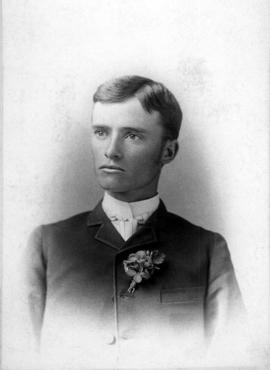
The Dairy Husbandry records are composed of correspondence and general office files which include reports, registry materials, receipts, bills, inventories, statements, photographs and miscellaneous items. The bulk of this collection is correspondence from companies and area dairy farmers to and from the head of the Dairy Husbandry department during the years covered. Other items in this collection show the day to day operation of the department. An item of note is correspondence from Ben Reifel while he was a student at SDSC looking for employment.
Items such as receipts, daily creamery reports, test supervisor's reports for advanced registry and feed record report cards were sampled and a small collection kept indicating how the reports were filled out and what they were used for. The photographs were separated and are housed in the photograph collection. Folders are arranged in alphabetical order and there under chronologically.

South Dakota State University. Department of Dairy Science
SDSU-Archives MA 030 · Records · 1899-2000

The South Dakota Nurses’ Association Records document the activities, governance, and advocacy efforts of the state’s principal professional nursing organization from the early 20th century through the late 1990s. The collection includes extensive materials from SDNA committees, task forces, board meetings, conventions, and district branches. Committee and task force files contain meeting minutes, correspondence, surveys, reports, and materials related to ongoing projects, reflecting the association’s focus on education, practice standards, health care policy, and labor conditions. Of particular note are the Economic and General Welfare Committee and SDNA’s Continuing Education Approval and Recognition Program (SD-CEARP), which offer insight into labor advocacy and professional development in South Dakota nursing.

The collection features broad correspondence from SDNA leadership, including the board of directors and district presidents, as well as communication with state agencies, legislators, and national nursing organizations. Reports include annual summaries from committees and districts, financial audits, and documentation of major initiatives such as Project Motion and the Economic Security Program. Membership materials track recruitment, retention, and survey results across districts. Extensive district-level documentation includes bylaws, officer lists, newsletters, and reports.

Other highlights include material from SDNA’s annual conventions, National Nurses Day celebrations, and Nurses Day at the Legislature, along with lobbying files detailing the association’s legislative priorities and partnerships. Project files document SDNA’s participation in state and national efforts, including public health outreach and the Vietnam Women’s Memorial. Scrapbooks, photographs, clippings, and audiovisual materials preserve the visual history of nursing in South Dakota.

Collected publications cover a wide range of nursing-related topics, including continuing education, standards of practice, nursing history, and health care legislation. The collection also holds records from affiliated organizations such as the American Nurses Association, South Dakota Board of Nursing, South Dakota League for Nursing Education, and other health-related groups. Physical artifacts, including uniforms, caps, and commemorative items, offer tangible connections to the nursing profession’s heritage in the state.

This collection offers insight into the evolution of nursing in South Dakota. It serves as a vital resource for studying professional development, health care advocacy, women’s leadership, public health policy, and the organizational history of nursing. The records document how South Dakota’s nurses helped shape statewide standards, responded to national trends, and promoted both education and workplace rights in a changing medical landscape.

South Dakota Nurses' Association
SDSU-Archives UA 008.01 · Records · 1900, 1949, 1970-1971, 1973, 1992-1994, 2001

This collection primarily consists of instructional material related to the Solid Waste Engineering and Management course at South Dakota State University. The materials include correspondence, course syllabi, lab schedules, lecture notes, exams, and documentation on topics such as landfill design and operation, leachate management, municipal solid waste systems, decomposition processes, and relevant environmental regulations. These materials were likely created by Professors Dwayne Rollag and Vernon Schaefer, who coordinated the course during the early 1990s.

Additional items in the collection pertain to departmental activities and general engineering topics. These include brochures, fact sheets, conference materials, seminar announcements, and departmental records. Notable items include a certificate awarded to the Civil Engineering Department for a 1949 Hobo Day parade float and a campus survey field notebook likely dating to around 1900, based on references to early campus structures.

This collection offers insight into civil and environmental engineering education at SDSU, particularly in the area of solid waste management. It reflects evolving academic approaches to environmental infrastructure and regulation during the 1990s. The inclusion of early surveying records and historical department memorabilia contributes to the broader institutional history of engineering at South Dakota State University.

South Dakota State University. Department of Civil and Environmental Engineering
Department of Music Records
SDSU-Archives UA 006.04 · Records · 1900-2018

The Music Department Records document the educational, performance, and promotional activities of the South Dakota State University Music Department from the early 20th century through the early 21st century. The collection includes newsletters, correspondence, concert and recital programs, posters, photographs, student writings, memorabilia, and administrative materials related to departmental ensembles and music curriculum.

The bulk of the collection consists of concert and recital programs for university ensembles—including the Concert Choir, Statesmen, University Women’s Ensemble, Jazz Ensembles, Symphonic Band, Civic Symphony, and the Pride of the Dakotas Marching Band—as well as student and faculty recitals. These materials capture performances held on campus, throughout the region, and on national and international tours. Many programs include performer rosters, program notes, translations, and accompanying newspaper clippings. Recurring events such as The Messiah, the Spring Festival of Music, Madrigal and Yuletide Feastes, and Friday Forum lecture-recitals are well represented. Materials from the Brookings Chamber Music Society further highlight collaborations with guest artists and touring ensembles.

Other items in the collection include early letterhead, alumni newsletters, promotional t-shirts, and photographs depicting choral groups and other student ensembles. Administrative files document planning for concerts and festivals, as well as the department’s broader public engagement.

This collection provides a record of music education and performance at SDSU, illustrating changes in curriculum, repertoire, and student involvement over time. It reflects the university’s role in cultivating musical talent and fostering cultural enrichment on campus and in the wider community.

South Dakota State University. Department of Music
Committee Files Collection
SDSU-Archives UA 051 · Collection · 1900-1989

This is an artificial collection composed of miscellaneous materials generated by various committees at South Dakota State University. Contents include pamphlets, reports, correspondence, proclamations, and meeting minutes. The materials were not acquired through a systematic collecting effort but are instead compiled as they are discovered. Documents in this box span a wide range of committee functions, from academic policies and faculty engagement to student recruitment, ROTC programming, and computing issues.

Among the more substantial items are minutes from the Classification Committee (1900–1914), which addressed admissions and credit policies, and the Rules and Regulations Committee (1931), which proposed consolidating institutional policies into a single publication. The Faculty Committee on Air Transport produced a report on the impact of air travel on university operations, while the Faculty Workshop Committee considered graduation timelines and student communication skills in a 1957 meeting. Materials from the Computer Users Advisory Council include correspondence about software copyright concerns during the rise of campus computing. The Committee on Radio Broadcasting outlined strategies for effectively using radio to serve South Dakota residents.

Other committees represented include the Curriculum and Veterans Enrollment Committee, which handled tuition claims and enrollment issues for veterans; the High School Contact Committee, which produced reports on outreach strategies and recruitment; and the ROTC Inspection and Military Field Day Committee, which planned field events in coordination with academic scheduling. A pamphlet from the Civilization Committee highlights a discussion series titled Dialogues in Higher Education that reflected on intellectual life and teaching philosophies.

This collection offers insight into the internal deliberations, planning efforts, and institutional concerns of mid-20th century campus committees. It documents the evolving priorities of a land-grant university (from student services and academic procedures to external communication and community outreach) during a period of significant social, technological, and administrative transformation.

Crozier Family Papers
SDSU-Archives MA 088 · Papers · 1900-2024

The Crozier Family Papers documents family history, educational pursuits, crafting expertise, and community involvement spanning multiple generations. The collection records Caryl's life and career, encompassing educational materials from high school and college, extensive correspondence with family and friends, journals and writings detailing life stories and memories, numerous craft and sewing projects, 4-H achievements, recipes, and homemaking activities. It also includes records of her participation in book clubs and other social groups, teaching materials, family and personal photographs, scrapbooks, photo albums, and memorabilia.

Additionally, the collection features family heirlooms such as clothing, quilts, and other crafted items. Files related to Caryl and her husband Edward cover travel journals, correspondence with family and friends, various home and craft projects, wedding and honeymoon details, and their writings. The collection also contains extensive genealogical records, primarily focusing on the Croziers, Kinkners, Ericksons, Joneses, and other extended family members. Researchers will find biographical information, correspondences, genealogical records, and historical notes about Beresford, South Dakota, as well as collected recipes, patterns, and club activities related to Caryl's mother, Elvera Kinkner.

Many files include commercial patterns annotated by Caryl, indicating the recipients of the clothing and images of the finished garments. The collection also features samples of sewing projects Caryl completed during college. Some materials contain stick pins and needles; caution is advised when handling these items.

Crozier, Caryl, 1938-
Faculty Round Table Records
SDSU-Archives UA 050.04 · Records · 1901

The Faculty Round Table Records consist of foundational administrative documents related to the formation and governance of the Faculty Round Table at South Dakota State University. The collection includes a handwritten ledger containing the group’s original by-laws and minutes from its first meeting. These by-laws outline the organization's name, mission, membership requirements, officer roles, and procedures for conducting meetings. A typewritten version titled "Tentative Rules Governing Faculty Round Table" presents similar content, providing a clearer reference for organizational structure and protocol.

This collection offers insight into the early governance and self-organization of faculty at SDSU, reflecting the values, administrative priorities, and participatory culture of the academic community during the group’s inception. The documents serve as valuable primary sources for understanding faculty governance practices, professional engagement, and institutional development.

South Dakota Agricultural College. Faculty Round Table
Jackrabbit Athletics Records
SDSU-Archives UA 046 · Records · 1901-2023

The Jackrabbit Athletics Records document the history, administration, and activities of South Dakota State University's athletics programs. The materials cover a wide range of sports and administrative functions from the early years of athletic participation to the university's transition to NCAA Division I status.

The collection includes administrative files related to academic advising, compliance, development, equipment, facilities, marketing and promotion, operations, the Jackrabbit Sports Network, and the ticket office. These are represented through annual reports, brochures, event programs, handbooks, newsletters, photographs, mascot design materials, and promotional mailers. Physical artifacts include banners, jerseys, t-shirts, and caps.

Records of the Athletics Committee consist of extensive meeting minutes and budget files. These documents provide insight into the financial and policy decisions guiding SDSU athletics.

Sport-specific files include materials on baseball, men's and women's basketball, cross country, equestrian, football, gymnastics, rodeo, soccer, swimming and diving, tennis, track and field, volleyball, and wrestling. These records contain media guides, fact books, programs, clippings, record books, and photographs. Cross country and track and field are especially well represented, with detailed documentation of results, workout plans, training strategies, and performance research.

The publications series features long-running serials such as the Rabbit Report (1978 to 2014) and The Bum (1956 to 2017). While incomplete, these publications offer a chronological narrative of SDSU athletics, including coverage of team performance, individual athletes, and university sports culture.

Other notable contents include materials related to special events such as the Beef Bowl, Festival of Champions, Jackrabbit Stampede Rodeo, and Jackrabbit Jamboree. There are also records documenting strategic planning for the transition to Division I, including the Division I Study and related correspondence.

The collection also reflects broader aspects of campus athletics, such as intramural sports, recreational programming, student wellness, and athlete recognition.

This collection provides a view of the development of collegiate athletics at South Dakota State University. It is a valuable resource for researchers studying the history of intercollegiate sports, athletic program administration, the student-athlete experience, gender in sports, sports marketing, and the evolution of athletics at land-grant institutions.

South Dakota State University. Jackrabbit Athletics
SDSU-Archives MA 058 · Collection · 1901-1936

This collection comprises historical sketches and narratives of individual counties in South Dakota, drawn from a variety of published and unpublished sources. Represented counties include Aurora, Bennett, Bon Homme, Brown, Brule, Buffalo, Butte, Campbell, Clark, Douglas, Faulk, Grant, Haakon, Hand, Hanson, Harding, Hughes, Lawrence, Lyman, McPherson, Miner, Minnehaha, Moody, Perkins, Roberts, Spink, Stanley, Sully, Walworth, Yankton, and others. The material includes excerpts from local newspapers, jubilee and anniversary editions, community cookbooks, historical essays, local author contributions, and academic theses. Some counties are represented by detailed historical accounts or commemorative publications, while others are represented by brief overviews or excerpts.

Sources range from local historians, regional publications, official county histories, and collaborative historical efforts such as the American Guide Series. Several items were contributed by local civic organizations or drawn from university theses. The materials date primarily from the early to mid-20th century and reflect the cultural, social, and civic histories of the respective counties.

SDSU-Archives MA 119 · Papers · 1902-2015

The collection documents the professional activities and service of Vincent Joseph McAuliffe, with an emphasis on his involvement in South Dakota 4-H and Cooperative Extension programs from 1939 to 2019. Materials include administrative records, reports, and strategic planning documents such as Growing South Dakota: Cooperative Extension's Strategic Plan, as well as documentation of professional development initiatives including the Professional Rural Youth Leaders Workshops. The collection also contains records related to McAuliffe’s role as a 4-H Youth Program Leader and his participation in statewide and national 4-H programs, including IFYE (International Farm Youth Exchange).

The collection further includes materials reflecting recognition and commemoration of McAuliffe’s service, such as certificates, awards, retirement materials, and documentation of Joseph McAuliffe Day. Additional materials consist of photographs, resumes, and publications related to 4-H programming, including 4-H Foundation activities, 4-H Hall of Fame recognition, and youth engagement initiatives such as the Teens as Teachers Program and 4-H Performing Arts. These materials document the development, outreach, and impact of 4-H and Cooperative Extension programming in South Dakota over the twentieth and early twenty-first centuries.

McAuliffe, Vincent Joseph
Academic Affairs Records
SDSU-Archives UA 002 · Records · 1902-2019

The Academic Affairs Records document the historical development of curriculum, faculty governance, institutional planning, and administrative decision-making at South Dakota State University from 1902 to 2018. The collection includes materials from the Office of the President, the Vice President and Provost for Academic Affairs, and various university committees. Topics covered include curricular changes, accreditation, faculty and departmental standards, budget planning, student organizations, and institutional milestones.

The bulk of the collection consists of administrative records—correspondence, budgets, strategic planning files, and committee minutes—reflecting academic policies and decisions. Notable topics include Resolution 21 and the Governor’s 5% budget reduction plan, which document financial restructuring and resource allocation. Materials also cover major events such as campus development projects, anniversaries, and faculty recognition.

Program review files form a substantial portion of the collection, detailing internal and external evaluations of academic departments submitted to the Board of Regents. These reviews are closely tied to accreditation efforts and strategic planning. Specialized accreditation reports from 1998 to 2017 assess institutional compliance with academic standards.

Records on curriculum development highlight the role of the Provost’s office in shaping academic offerings, including new course proposals, program modifications, general education revisions, and course standardization through the Common Course Numbering system. Faculty governance is represented through committee minutes, departmental reviews, and performance evaluations, including documentation from the Bush Faculty Development Project.

The collection also preserves the history of commencement at SDSU, with programs, scripts, honorary degree documentation, faculty awards, photographs, baccalaureate invitations, and diplomas dating back to 1902.

Additional subject files address topics such as Division I Athletics, the Resource Allocation Model (RAM), and the Student Project Implementation initiative, which aimed to enhance academic and student support services.

Overall, this collection offers a comprehensive view of SDSU’s academic evolution and institutional governance, serving as a valuable resource for researchers, administrators, and historians studying the university’s history and its role in higher education.

South Dakota State University. Office of Academic Affairs
SDSU-Archives UA 024 · Records · 1904-2008

This collection documents the establishment, development, and ongoing activities of the Ethel Austin Martin Program in Human Nutrition at South Dakota State University. It includes records related to the Endowed Chair, Distinguished Lectureship, Visiting Professorship, and collected publications, as well as a substantial body of personal papers and professional materials created or compiled by Dr. Ethel Austin Martin.

The Endowed Chair records primarily relate to the creation and development of the E.A. Martin Program and its associated academic positions. These files include financial documents, progress reports, human nutrition committee records, and the formal memorandum of agreement with Dr. Martin. Also present are materials pertaining to the Basic Course in Nutrition, including syllabi, textbook selections, course materials, and research. A significant portion of these records consists of correspondence, working papers, and statements authored by Dr. Martin and university staff as they shaped the chair's role in advancing nutrition education and research.

The Distinguished Lecturer records reflect the administration of annual lectureships hosted on campus, supported by Martin’s endowment. These events featured nationally recognized experts in nutrition, each selected for their excellence in a particular area of the field. The files include materials related to lecture planning, speaker selection, publicity, programs, announcements, audio recordings, and documentation of campus and community engagement. Dr. Martin was actively involved in shaping the lecture series, and her correspondence and notes provide insight into the intellectual goals and collaborative spirit of the program.

The Visiting Professorship component represents a unique multidisciplinary initiative that brought leading scholars to SDSU for short-term residencies. Visiting professors provided lectures, led discussions, and worked closely with faculty and students across various departments. These records include program development files, planning committee materials, evaluations, publicity, audio and video recordings, and correspondence with and about visiting scholars. The structure of this program, supported by a rotating task force of faculty and the Human Nutrition Fund Committee, encouraged cross-disciplinary inquiry and contributed to broadening the scope of human nutrition research and education on campus.

The collected publications series contains journal articles, books, newsletters, and proceedings related to nutrition. Most of these materials were gathered by Dr. Martin or the program in support of the Basic Course in Nutrition. They provide context for evolving conversations in the field and reflect the intellectual foundation of the program’s educational goals.

This collection is a resource for understanding the development of nutrition as a multidisciplinary academic and applied field at South Dakota State University. Dr. Ethel Austin Martin’s visionary leadership and generous endowment supported decades of scholarly engagement, educational innovation, and public outreach in human nutrition. The records document the collaborative processes behind major academic programs and events, and preserve the legacy of a pioneering nutritionist who profoundly influenced the direction of nutrition education and research in South Dakota and beyond.

South Dakota State University. Ethel Austin Martin Program in Human Nutrition
Ethel Austin Martin Papers
SDSU-Archives UA 024.01 · Papers · 1904-1993

The Ethel Austin Martin Papers span her personal life, academic background, professional career, and enduring legacy in the field of nutrition. The collection includes correspondence, publications, autobiographical writings, oral history transcripts, photographs, ephemera, awards, and memorabilia. It documents her education from elementary school through graduate studies at Columbia University, her work as an educator and director of nutrition services at the National Dairy Council, and her authorship of several widely used nutrition textbooks. Also included are materials related to her professional affiliations, recognitions, and involvement in national and international conferences. A significant portion of the collection relates to her long-standing relationship with South Dakota State University, particularly her efforts to establish the Ethel Austin Martin Program in Human Nutrition. Items such as diplomas, certificates, calling cards, and a blanket worn in the first Hobo Day parade help illuminate her personal story, while her correspondence and writings reflect her contributions to nutrition education and public health.

Ethel Austin Martin was a nationally recognized leader in nutrition education and public health. As director of nutrition services at the National Dairy Council, she helped shape national nutrition programming. Her influence extended through her textbooks, professional service, and advocacy. This collection is of particular value to researchers studying 20th-century nutrition education, women in science, public health outreach, and South Dakota State University's institutional history. The papers offer insights into both her professional impact and personal legacy, especially her dedication to fostering human nutrition education through the endowed chair at SDSU.

Martin, Ethel Austin
SDSU-Archives MA 010 · Records · 1904-1999

The South Dakota Dairy Association records document its role in shaping the state's dairy industry from the early 1900s to the early 2000s. This collection includes ledgers, administrative materials, financial records, and publications that provide insight into the association's governance, advocacy, and industry impact. Annual reports, meeting minutes, and convention programs spanning a century highlight efforts to promote dairy farming practices, support producers, and establish industry standards.

Significant materials include governance documents such as the association's constitution, amendments, and certificate of incorporation, as well as financial records detailing operations and contests. Convention programs from 1911 to 1999, along with reports on industry regulations, illustrate the association's efforts to foster professional development and policy discussions. The collection also includes medals, photographs, and newspaper clippings, offering a connection to the association's legacy.

These materials provide context for understanding the evolution of South Dakota's dairy industry, reflecting broader agricultural trends, economic contributions, and the collaborative efforts that shaped the state's dairy sector.

South Dakota Dairy Association
Ben Reifel Papers
SDSU-Archives MA 009 · Papers · 1905-1990

The Ben Reifel Papers document the career of Ben Reifel, the first Lakota Sioux to serve in the U.S. Congress, highlighting his work as a legislator, his tenure with the Bureau of Indian Affairs, and his advocacy for Native American communities. The collection includes correspondence, photographs, audiovisual materials, memorabilia, and scrapbooks that provide insight into his contributions to public service and Native American affairs. As a pioneering Native American leader, Reifel played a key role in shaping policies related to education, healthcare, and economic development. This collection serves as a valuable resource for understanding his lasting impact on indigenous representation in government and South Dakota's political landscape.

The activities series contains records of Reifel's involvement with various organizations and initiatives, including the Boy Scouts of America, the National Park Service, and the Dakota Territory Citizen Certificates project. It also covers his efforts in Native American affairs, congressional trips, and public events. The awards and honors section features certificates, plaques, medals, and other recognitions Reifel received throughout his career, including awards from the Boy Scouts of America, Sioux tribes, and South Dakota State University.

The Bureau of Indian Affairs materials include correspondence, newsletters, and newspaper clippings that document Reifel's work in advancing Native American education, healthcare, and policy. The campaign series provides an in-depth look at his political career through financial records, advertisements, schedules, and materials related to the South Dakota Republican Party platforms.

Correspondence within the collection spans from Reifel's tenure with the BIA through his congressional career, featuring letters exchanged with prominent political figures such as Barry Goldwater, Lyndon B. Johnson, Richard Nixon, and George McGovern. The family history section contains biographical materials, educational records, military service documents, and personal writings that provide insight into his early life and career development.

Memorabilia in the collection includes campaign materials, presidential inauguration items, and personal artifacts such as a U.S. Annotated Code book with Reifel's name embossed on the cover. The photographs offer a visual record of his political career, community interactions, travels, and personal life, particularly highlighting his work in Congress and his connections with Native American communities.

The audiovisual materials consist of campaign advertisements, legislative discussions, interviews, and speeches on healthcare, agriculture, and public service. These recordings also include public appearances and fundraising events. Scrapbooks primarily contain newspaper clippings and campaign materials that document Reifel's public image and key political milestones.

Collected materials include books, periodicals, programs, and poetry reflecting Reifel's diverse interests and professional pursuits. His speeches and writings consist of transcripts and drafts of addresses given at events such as Memorial Day ceremonies and commencement exercises.

Overall, the Ben Reifel Papersprovides a comprehensive view of his contributions to public service, Native American advocacy, and South Dakota’s civic and political landscape. It serves as a valuable resource for researchers seeking to understand his legislative impact, community engagement, and personal legacy.

Reifel, Ben, 1906-1990
Lotto Underwood Papers
SDSU-Archives MA 083 · Scrapbooks · 1905-1913

This collection consists primarily of the scrapbook The Girl Graduate, Her Own Book, compiled by Loto Rollinstahl Underwood to document her college experience. The scrapbook captures a range of social and academic life through pasted and interleaved materials, including invitations, class listings, programs, dance cards, commencement publications, and newspaper clippings. Spanning 176 numbered pages, the volume features few written entries and no photographs, but offers insight into early 20th-century collegiate customs and women’s student life. Its significance lies in its value as a personal and cultural artifact reflecting women's higher education experiences of the period.

Underwood, Lotto Rollinstahl, 1888–1968
Dakota Farmer Collection
SDSU-Archives MA 038 · Collection · 1906-1946

The Dakota Farmer Collection is composed primarily of printing plates, specialty publications, survey reports, correspondence, and photographs documenting the development, promotion, and influence of The Dakota Farmer, a prominent agricultural periodical in the northern Great Plains. The bulk of the collection consists of printing plates used in publication production, including column and cover mastheads, ornamental frames, and original artwork. These visual elements reflect the magazine’s branding and editorial identity during the early to mid-20th century. A detailed inventory of the plates is provided in the container list.

The publications within the collection were primarily produced for advertising and marketing purposes, aimed at demonstrating the magazine’s value to potential advertisers. The reports consist of surveys conducted among farmers, merchants, and bankers in North and South Dakota, assessing the magazine’s market reach, readership habits, and its role in shaping regional agricultural discourse.

A notable file documents the process of contracting a redesigned cover for The Dakota Farmer. This material includes correspondence between magazine staff and the contractor, critical evaluations of contemporary agricultural publications, and three proposed sample covers. The file offers a unique view into the publication’s design decisions, aesthetic considerations, and promotional strategies.

These materials illustrate The Dakota Farmer’s function not only as a journal of agricultural information but also as a tool for regional promotion and commercial engagement in the Dakotas.

Dakota Farmer (Aberdeen, S.D.)
William H. Powers Papers
SDSU-Archives UA 053.009 · Papers · 1907-1950

The William H. Powers Papers consist primarily of handwritten and draft materials authored by Powers concerning the institutional history of South Dakota State College. The collection also includes general correspondence, correspondence with entomologist J.M. Aldrich, and documents specifically focused on the founding and development of the Brookings Public Library. Additional writings by Powers reflect his historical interests and biographical sketches, including materials related to figures such as Robert F. Kerr and Pamelia Phillips Banks-Warriner, and topics like the McLouth administration and the Upheaval of 1893. A small number of items pertain to unrelated activities, including World War I-era materials from the World Disarmament Committee and a 1917 anti-conscription petition signed by faculty. The collection also contains a certificate of membership in the South Dakota Academy of Science.

These papers document William H. Powers' historical research on South Dakota State College and his civic involvement in Brookings, South Dakota. His notes and correspondence offer insight into early 20th-century library development, academic perspectives on military conscription during World War I, and efforts to preserve institutional memory. The collection is particularly valuable for understanding early initiatives related to the Brookings Public Library and faculty engagement in national and local issues.

Powers, William H. (William Howard) 1868-1936
SDSU-Archives UA 006.09 · Records · 1907-2013

This collection is composed of materials produced by the Visual Arts Department at South Dakota State University and reflects the department’s educational, creative, and promotional activities. It includes programs, posters, pamphlets, mailers, photographs, newsletters, institutional reviews, and documentation of faculty, student, and alumni exhibitions. Notable events represented include the Annual Juried Student Exhibition, the Alumni Exhibition, faculty exhibitions, and a variety of senior shows. Also present are records related to the Ritz Gallery, including retrospective exhibitions, thematic showcases, and promotional materials.

The collection contains examples of student academic work, including projects from Art History courses—such as the Wacipi and September 11th Projects—and features contributions from visiting artists and faculty, including international visitors and presenters. Additional items of interest include a scrapbook created by members of the Delta Phi Delta Art Fraternity, which contains clippings, memorabilia, and original artwork, as well as photographs of early art faculty such as Ada B. Caldwell and Maud Goddard.

This collection is significant for documenting the evolution of art education and visual culture at SDSU, highlighting the department’s emphasis on both academic study and public exhibition. It provides insight into student and faculty creativity, the development of art curricula, and the broader role of the arts on campus and beyond.

South Dakota State University. Department of Visual Arts
SDSU-Archives UA 019 · Records · 1907-2018

This collection consists of administrative records generated by SDSU’s Student Affairs Division and its predecessor units. It includes detailed biennial and annual reports submitted to the university president, providing insights into organizational structure, budget planning, student service initiatives, and campus life development. The biennial reports are particularly rich in historical and operational content, covering budget requests, staffing changes, departmental goals, and specialized student services such as counseling, orientation, student records, scholarships, and placement services.

Additional materials include planning documents, strategic initiatives, student handbooks, orientation materials, diversity and inclusion programs, alcohol education efforts, and retention studies. Records from committees (e.g., Student Affairs Council, System Retention Committee), campus-wide assessments (e.g., NCA Self-Study), and events (e.g., Hobo Day, Scholars Receptions) are also represented, highlighting the division’s broad engagement in university life.

This collection provides documentation of how student services have been conceived, implemented, and evaluated at SDSU across decades. It is especially valuable for researchers studying the evolution of higher education administration, student development, and campus policy regarding diversity, wellness, and academic support. The records offer institutional context for broader changes in student affairs nationally, including the expansion of student support services, accountability initiatives, and demographic shifts in student populations.

South Dakota State University. Division of Student Affairs
SDSU-Archives MA 002 · Records · 1908-1928

Composed of miscellanies from both the era of the Forum and the time of the Ethical Culture Club. Materials from the latter era consist of the record of meetings from the years 1908-1910. Material for the latter years includes the minutes of meetings, a copy of the constitution, some miscellaneous materials and a history of the club written by William Powers.

Ethical Culture Club (Brookings, S.D.)
Phi Upsilon Omicron Records
SDSU-Archives UA 035.10 · Records · 1909-2006

The collection is composed of material collected by the Phi Upsilon Omicron Phi Chapters at South Dakota State University. Included are correspondence, minutes, newsletters, annual reports, scrapbooks, member lists, financial information, publications, clippings, meeting minutes and agendas, and photographs.

Also included is "The Candle," the Phi Upsilon Omicron National Honor Society journal, covering the years 1930-2004, annual reports submitted to the national headquarters, Initiate information sheets, detailed ledger sheets starting in 1934, hand-made chapter programs, very creative from 1937 to about 1980, senior biographies from 1952-1971 which are very detailed and include photographs, and detailed secretaries notebooks.

The scrapbooks consist of photographs, cards, significant correspondence and programs for events held by the chapter. Some items of note include a Coat of Arms patch for Phi Upsilon Omicron, a Holy Bible presented to the chapter by Laura J. McArthur in December 1941, and a material related to a Fruitcake Fundraising project which includes photographs, but the fruitcake recipe could not be found.

The photographs are not well described; however, most are group shots of members.

Phi Upsilon Omicron
SDSU-Archives UA 037 · Records · 1910-2007

The Students’ Association Records document the administration, governance, finances, and policy activities of a student governing organization over much of the twentieth century, with particularly dense coverage from the 1970s through the 1990s. The materials include constitutions and by-laws spanning multiple decades, annual and final reports, handbooks, resolutions, election files, newsletters, and clippings that trace the evolution of student governance structures and priorities. Administrative files reflect a wide range of student concerns and services, including housing, health services, legal aid, alcohol policy, multiculturalism, student organizations, campus safety, and quality of student life.

Agendas and minutes record deliberations and decision-making processes, while Board of Control minutes, beginning as early as 1910, provide long-term continuity in oversight and institutional governance. Associated committee records document student participation in advisory and administrative bodies related to academics, student activities, athletics, food services, media, and campus-community relations. Financial records detail budgeting processes, activity fees, allocations, audits, and fiscal policy, illustrating how student funds were managed and contested over time. Subject files further contextualize these records within broader state, regional, and national higher education issues, including tuition, financial aid, legislative advocacy, student rights, and inter-university relations.

These records offer a comprehensive view of student governance as an evolving institution within the university, revealing how students organized, represented themselves, and negotiated authority with university administrators and external bodies. They are significant for understanding changes in student life, campus culture, and higher education policy across much of the twentieth century. Researchers will find particular value in the long chronological span of constitutions and minutes, the detailed financial documentation of student fees and budgets, and the subject files that situate local student concerns within statewide and national movements in higher education and student activism.

South Dakota State University, Students' Association
Donald D. Johnson Papers
SDSU-Archives MA 018 · Papers · 1910, 1918

The Donald D. Johnson Papers contain a photocopy of a narrative written around 1918 describing the experiences of John P. (Johan Peter) Johnson, a Swedish immigrant and grandfather of the donor, during the years 1871 to 1879. The text was translated by Alma N. Lundin and read at the Benton Lutheran Church in South Dakota circa 1918. The original document is not included. The collection also includes The Quill, a publication produced by students at Marion High School in Marion, South Dakota, published by Donald D. Johnson in memory of Mr. and Mrs. Adolph Johnson of Hartford, South Dakota, presumed to be his parents.

The papers document Swedish immigration to South Dakota and the preservation of family and community history through translation and commemorative publication.

Johnson, Donald D. (Donald Dale)
Harold W. Shunk Papers
SDSU-Archives MA 003 · Papers · 1911-1993

The Harold W. Shunk Papers focuses on Native American history, particularly the Dakota and Lakota tribes. It includes a wide range of materials, such as newsletters, manuscripts, notebooks, and historical lists. The collection documents significant events and figures in the history of the tribes and their interactions with federal agencies.

Among the key materials are typewritten transcripts from the Wahehe Heirship hearing, personal histories related to the Cheyenne River Indian Reservation, and writings about the Dakota Indian Tiospaye system. The collection also covers military posts like Fort Laramie and Fort Totten and includes detailed accounts of the Big Foot massacre at Wounded Knee and the second Battle of Wounded Knee. Prominent individuals featured in the records include Crazy Horse, Crow King, Spotted Tail, Plenty Horses, and Harold W. Shunk, providing insights into the tribal leadership, cultural practices, and the role of the Bureau of Indian Affairs (BIA) in local governance

A significant portion of the collection focuses on the Wahehe Heirship hearing transcripts, which address inheritance rights for Wahehe's allotment, alongside personal histories of individuals connected to the Cheyenne River Indian Reservation. Writings on the Dakota Indian Tiospaye system feature alongside documents pertaining to military posts such as Fort Laramie and Fort Totten. Accounts of moments such as the Big Foot massacre at Wounded Knee and the second Battle of Wounded Knee are also included.

Physical artifacts, such as mounted steer horns, provide additional cultural context.

Shunk, Harold, 1907-1998
SDSU-Archives MA 004 · Papers · 1911-1993

The F. C. W. Kuehn Papers consist of architectural plans for various buildings, primarily located in South Dakota, spanning from 1917 to 1952. It includes designs for one-story and other structures, such as commercial buildings, schools, churches, and residential properties. Notable examples include the Huron Dairy Products Company, several South Dakota Standard and Kuehn’s Standard school buildings, and the First Methodist Episcopal Church in Doland. Additionally, the collection features plans for public works projects, including city auditoriums, fire stations, and service stations, as well as residential structures and a variety of renovations and repairs. These plans reflect the architectural development and growth of South Dakota during the early to mid-20th century, highlighting a range of construction types and purposes.
The architectural drawings include work from both Kuehn's years enrolled in the International Correspondence Schools and his career as an architect.

The general items are composed of miscellaneous items related to Kuehn.

The random specifications are composed of construction specifications for projects Kuehn worked on.

Kuehn, Frank Charles William, 1884-1970
SDSU-Archives UA 052.11 · Records · 1911-1930

This collection is composed of printed material created by the School of Agriculture at South Dakota State University and includes newspapers, programs, bulletins, and recruitment circulars. Items range in date from 1911 to 1933 and document student activities, curriculum, publicity, and institutional functions.

The Aggie News, issued in 1929 and 1930, was a quarterly newspaper produced by the State Alumni Association of the School of Agriculture. It featured news relevant to students and faculty, including organizational updates and event announcements. The collection includes partial runs only.

Recruitment circulars, dating from circa 1925 to 1930, were distributed by the principal to promote the School of Agriculture. These documents contained promotional text, program highlights, and occasionally included photographs of the campus and students.

The 1911 bulletin contains in-depth information about academic departments, courses of instruction, entrance requirements, administration, instructors, facilities, student expenses, and available scholarships. It serves as a comprehensive guide to the school’s educational offerings at that time.

Other items include commencement programs from 1926 to 1931 and 1933, Junior-Senior Banquet programs from 1914 and 1928, a senior class play program from 1929, and a circa 1912 promotional brochure titled Keepin' Mind School of Agriculture.

This collection illustrates the educational environment, student life, and outreach strategies of the School of Agriculture during the early 20th century. It reflects institutional efforts to recruit students, inform the public, and document academic milestones through print media. The items provide insight into the agricultural education practices and campus culture of South Dakota State University during this formative period.

South Dakota State University. School of Agriculture
SDSU-Archives UA 052.05 · Records · 1911-2008

This collection is composed of the official minutes, agendas, and publications generated by the South Dakota Board of Regents, spanning from 1923 to 2006. Materials were collected by the Office of the President and various departments at South Dakota State University for institutional reference. The minutes document the proceedings and decisions of the Board across multiple decades and include indexes with subject notations in later volumes, enhancing accessibility to specific topics discussed. Supporting documents include fiscal reports, policy updates, meeting agendas, and committee materials from the Board’s work on academic affairs, student affairs, finance, and governance. A significant portion of the publications consists of formal policy guides, faculty leave and tenure documents, athletic rules, and union agreements, such as the University Faculty Collective Bargaining Agreement (2005–2008). Of particular note are unique items such as correspondence from SDSU President Carol Peterson and honorary degree documentation for Robert T. Wagner.

The collection demonstrates the administrative structure, decision-making processes, and evolving governance of South Dakota’s public higher education system. It is an essential resource for understanding the history and policy shifts within the South Dakota Regental System, particularly as they affected South Dakota State University. Its breadth of coverage offers insight into system-wide coordination, budget planning, faculty relations, and academic policy formation throughout the 20th century and into the early 2000s.

South Dakota Board of Regents
SDSU-Archives MA 071 · Collection · 1912-1986

This collection consists of materials related to Blanche Avery Johnston, a member of the South Dakota State College Class of 1916. The materials provide insight into student life in the early 20th century and the experiences of Johnston and her classmates. Included are a booklet titled College Life at South Dakota State College, a news clipping featuring an interview with Johnston about the first Hobo Day celebration, a series of letters exchanged among members of the Class of 1916, and photographs documenting their time at the college. These items offer valuable documentation of campus traditions, student correspondence, and collegiate culture during the 1910s.

Johnston, Blanche Avery 1895-1986
SDSU-Archives MA 028 · Records · 1912-2000

The General Federation of Women’s Clubs of South Dakota (GFWC of SD) Records document the organizational, civic, and cultural activities of the state’s women’s club movement from the early 20th century through the late 20th century. The collection provides insight into statewide club administration, local club initiatives, civic improvement efforts, and the promotion of public service, education, arts, and women’s leadership.

The records include administrative materials such as constitutions and by-laws, directories, newsletters (The South Dakota Clubwoman), handbooks, program suggestions, publications from GFWC departments, legislative alerts, project guidelines, and conference materials. District V records are particularly robust, containing minutes, correspondence, club reports from various South Dakota communities, and membership data.

A substantial portion of the collection pertains to GFWC Brookings and the Brookings Civic League, including minutes, reports, scrapbooks, photographs, and documentation of programs such as the FREE Enterprise Program and Youth Improvement initiatives. These materials reflect community-based projects, public health and education support, and civic engagement.

The records also extensively document the Memorial Art Center Campaign, including architectural plans, correspondence, fundraising and financial records, publicity materials, and historical background. This segment captures the GFWC’s central role in establishing what became the South Dakota Art Museum on the campus of South Dakota State University.

Photographic materials span nearly 1,300 images and depict club events, members, and sponsored activities. The collection as a whole illustrates the GFWC of SD’s lasting impact on civic life, education, and cultural development across South Dakota.

This collection documents a grassroots civic organization, women’s leadership, and public service in South Dakota. It offers valuable source material for researchers studying women’s voluntary associations, local history, civic improvement movements, and the evolution of cultural institutions in the state.

General Federation of Women's Clubs of South Dakota
SDSU-Archives MA 033 · Collection · 1913-1918

The Chicago, Milwaukee, and St. Paul Railway Company Records are significant for their detailed documentation of railroad operations and internal communications during a formative period in American transportation history. Originating from the Madison, South Dakota depot, these materials provide insight into how a major regional railway coordinated its daily activities, managed logistics, and handled communication across departments. Forms such as car reports, conductor delay records, and telegrams offer a practical view of the operational structure and administrative routines of a Class I railroad.

The collection is especially valuable for understanding the role of railroads in the economic development of South Dakota and the broader Midwest. It reflects how railway infrastructure supported small-town commerce and regional connectivity, offering a window into how railroads functioned as essential lifelines for rural communities throughout the 20th century.

In addition to its content, the collection carries significance for its preservation history. After being donated to Prairie Village in Madison, the records survived a barn fire that destroyed much of their storage environment. The effort to salvage, photocopy, and encapsulate representative samples demonstrates a successful recovery initiative and highlights the importance of archival intervention in the face of loss or deterioration.

Although the records do not constitute a comprehensive archive of the company’s transactions, they offer a rare and instructive sampling of original railroad forms and internal procedures. As such, they serve not only as a resource for transportation historians but also as a useful reference for scholars interested in archival preservation, regional history, and industrial-era communication practices.

Chicago, Milwaukee, and St. Paul Railway Company
Hobo Day Collection
SDSU-Archives UA 062 · Collection · 1913-2023

This artificial collection documents Hobo Day, the homecoming celebration of South Dakota State University, through a wide range of published and ephemeral materials dating from 1912 to 2023, with the bulk of the material from the mid twentieth century through the early twenty first century. The collection consists of newspapers, newsletters, correspondence, news releases, souvenir programs, posters, invitations, handbooks, certificates, placemats, and extensive ephemera such as buttons, bumper stickers, hats, pennants, a crown, license plates, and apparel. Also included is a substantial photographic component documenting parades, football games, royalty, floats, student activities, visiting dignitaries, alumni events, and associated traditions across multiple decades. Materials originate from campus offices, student organizations, community sources, donors, and later retrospective collecting efforts. Items are added to the collection as materials are discovered or donated, reflecting its ongoing and accumulative nature.

This collection documents the development and continuity of Hobo Day as a central tradition in the history of South Dakota State University. The materials document changes in student culture, athletics, campus traditions, alumni engagement, and public representation of the university over more than a century. The long run of buttons, ephemera, and photographs offers a detailed chronological record of themes, slogans, design styles, and institutional priorities associated with homecoming celebrations. The collection supports research in university history, student life, regional culture, and commemorative practices at land grant institutions.

South Dakota State University. Hobo Day
SDSU-Archives MA 007 · Records · 1913-2008

The South Dakota Association of Family and Consumer Sciences (SDAFCS) Records document the evolution of home economics and family and consumer sciences organizations at both the state and national levels. The collection spans from 1913 to 2008 and includes records from predecessor organizations such as the National Association of Extension Home Economists, the South Dakota Home Demonstration Agents Association, the South Dakota Home Economics Association, and the South Dakota Association of Extension Home Economists. Materials include meeting minutes, officer handbooks, annual conference programs, newsletters, reports, correspondence, scrapbooks, constitutions and bylaws, financial records, award documentation, and photographs.

The records trace the activities and organizational changes of home economics professionals, including local and national conference proceedings, program development, and educational initiatives. The earliest materials document the formation of the South Dakota Home Demonstration Agents Association and its leadership, while later records highlight the organization’s transition through multiple name changes, reflecting shifts in the professional scope of family and consumer sciences. Of particular note are correspondence files related to early officers such as Eva Dawes, as well as detailed meeting and committee records from the South Dakota Association of Extension Home Economists, which illustrate the structure and governance of the association from the 1940s through the 1990s.

The collection also contains materials related to professional development and recognition, such as award programs, scholarship information, and membership records. Scrapbooks and photographs document conferences, special events, and member activities. Conference materials and strategic plans from the 1990s and 2000s illustrate the association’s continued focus on leadership, education, and public engagement in family and consumer sciences.

These records document the professionalization and history of home economics in South Dakota, the expansion of educational outreach through the Cooperative Extension Service, and the development of the family and consumer sciences discipline nationally. They provide valuable insight into the leadership, governance, and community service of South Dakota educators, particularly women, who advanced the field through teaching, extension work, and organizational involvement.

South Dakota Association of Family and Consumer Sciences
SDSU-Archives UA 008 · Records · 1913-2020

The College of Engineering Records document the development, administration, instruction, research, outreach, and public engagement efforts of the College of Engineering at South Dakota State University. The materials span from the early 20th century through the early 2000s and include booklets, programs, brochures, correspondence, meeting minutes, periodicals, reports, posters, and photographs.

The collection includes annual reports, course catalogs, and documentation of student-focused programs such as Engineering Expo, Exploration Days, and the Senior Design Conference. A significant portion relates to Engineering and Science Research at SDSU, consisting of researcher-specific summary sheets, reports, and correspondence covering work in engineering, chemistry, pharmacy, and agronomy.

Records reflect student and professional development through honor societies, trade fairs, and seminars on ethics, entrepreneurship, and sustainability. Impulse magazine, a recurring periodical published by the college, is well represented and highlights events and accomplishments. Also included are files on the history of the college, the development of its departments and facilities, and its community and industry partnerships.

Biographical files feature individuals such as Harold M. Crothers, Harry and Halvor Solberg, and Guy Lee Boyden. The collection also includes material related to the “engineering controversy” of the 1970s, which involved a proposal to relocate the College of Engineering to another institution. These records, composed mainly of clippings, correspondence, and notes, document a critical moment in the college’s history.

This collection documents the evolution of engineering education at South Dakota State University. It offers insight into the college’s response to statewide and national trends, its contributions to research and workforce development, and its engagement with public and private sectors. The records reflect efforts to expand STEM education, support underrepresented students through programs like the Flandreau Indian School Success Academy, and promote innovation through public exhibitions and outreach. Researchers will find valuable material on institutional history, pedagogy, research, and the impact of engineering education in South Dakota.

South Dakota State University. Jerome J. Lohr College of Engineering
SDSU-Archives MA 026 · Records · 1914-1995

This collection documents the activities and organizational structure of the South Dakota Farm Bureau, with records spanning local county extension reports, internal committee operations, marketing initiatives, and administrative governance. The materials reflect the Bureau's efforts to support and advocate for South Dakota’s agricultural communities through coordinated programming, policy development, and member engagement.

Included are annual and narrative reports from county extension agents in Brookings, Codington, and Hamlin Counties, which illustrate localized outreach and education efforts in collaboration with the Farm Bureau. Federation Records comprise a significant portion of the collection and include documentation from various standing and ad hoc committees—such as the Executive Committee, Women’s Committee, Marketing Committee, and Young Farmers and Ranchers Committee—highlighting the Bureau’s focus on leadership development, legislative advocacy, and agricultural promotion. Bylaws, financial reports, meeting minutes, clippings, and historical narratives provide additional context for the organization’s governance and evolution. Records from affiliated entities such as the Mutual Insurance Company and a Service Company further illustrate the Bureau’s broader cooperative and service functions.

This collection offers valuable insight into the history, priorities, and grassroots organization of the South Dakota Farm Bureau and its role in shaping agricultural policy and community development in the state.

South Dakota Farm Bureau
SDSU-Archives MA 053 · Papers · 1914-2014

The E.S. McFadden Papers document the career, research, and legacy of Edgar Sharp McFadden (1891–1956), a pioneering American plant breeder best known for developing Hope Wheat, the first variety resistant to stem rust. McFadden’s work in genetics and agronomy spanned South Dakota and Texas, and he contributed significantly to agricultural science through federal and academic research programs, including with the USDA and Texas A&M.

The collection spans McFadden’s professional life and includes research notebooks, writings, correspondence, photographs, honors, and biographical materials. Of particular note are research materials related to wheat breeding and rust resistance, including field data, experimental notes, and correspondence concerning Hope Wheat. Writings include published and unpublished scientific and popular articles, speeches, and autobiographical pieces. Also included are awards and certificates from scientific societies, clippings about McFadden’s achievements, and documentation of public recognition such as “McFadden Appreciation Day.” The papers provide insight into 20th-century advancements in crop improvement and agricultural science in the United States.

McFadden, E. S. (Edgar Sharp), 1891-1956
SDSU-Archives MA 012 · Records · 1914-2009

The South Dakota Farmers Union Records provide a comprehensive account of the organization's history, advocacy, and role in shaping agricultural policy from the early 20th century to the early 2000s. The collection documents the Union's efforts to support family farmers, promote cooperative enterprises, and influence state and national agricultural legislation. Materials include organizational records, correspondence, meeting minutes, financial statements, educational materials, photographs, audiovisual recordings, and publications.

A significant portion of the collection pertains to the Union's legislative and political engagement, featuring records from state and national conventions, speeches, campaign materials, and lobbying efforts. These materials illustrate the Union's role in advocating agricultural policy reforms, rural economic development, and cooperative business models. Key figures such as Ben Radcliffe, George McGovern, Hubert Humphrey, and Eleanor Roosevelt are represented in convention proceedings, recorded speeches, and radio broadcasts. The 1972 Supreme Court case on public school funding through property tax is also documented through clippings, correspondence, and legal evidence.

The audiovisual materials consist of 13 audiocassettes, 156 open reel tapes, 6 wire recordings, and 34 16mm motion picture films, spanning from 1948 to 1992. These recordings capture state and national conventions, radio programs, speeches, and advertisements, along with footage of state camp activities, tours, picnics, and parades. Many of the materials promote legislative initiatives and endorse political candidates. In 2018, the South Dakota Farmers Union audiovisual collection was digitized with the support of a Recordings at Risk grant from the Council on Library and Information Resources. Due to the fragile state of many recordings, the Archives partnered with George Blood L.P. to ensure high-quality digital preservation in sustainable formats.

The Cooperative Legacy Project, spearheaded by Chuck Groth, communications director for the South Dakota Farmers Union from 1972 to 2008, provides an in-depth oral history of the cooperative movement in South Dakota. This project includes over 110 hours of digital audio interviews with Farmers Union members, cooperative managers, and farm organization leaders. The interviews, recorded in MP3 and WAV formats, are supplemented by documents, scanned photographs, and rough transcriptions, offering insight into the history and impact of the cooperative movement.

The collection also includes publications from the National Farmers Union and various state organizations, as well as South Dakota Farmers Union-produced materials such as convention programs (1938-1983), policy statements (1954-1988), handbooks, and brochures. The photographic collection, comprising over 33,000 photographs and negatives, documents youth programs, conventions, picnics, tours, and key moments in the organization's history, as well as images published in the South Dakota Union Farmer.

Records from local unions throughout South Dakota provide insight into grassroots organizing efforts, consisting of charter records, attendance logs, minutes, and correspondence, with some materials accompanied by photographs. This material includes essential governance documents such as constitutions, by-laws, speeches, scrapbooks, and advertising materials, with Farmers Union annual convention minutes spanning from 1926 to 1946.

This collection serves as an resource for researchers studying agricultural policy, rural advocacy, cooperative movements, and the political and economic history of farming in South Dakota and the United States. Through its extensive documentation of legislative efforts, community programs, and cooperative business models, the South Dakota Farmers Union Records provide a unique perspective on the evolving landscape of American agriculture.

South Dakota Farmers Union
SDSU-Archives MA 023 · Collection · 1914-1916

The collection consists of correspondence between Henry Langford Loucks and Richard F. Pettigrew from 1914 to 1916, primarily discussing political issues related to the progressive movement in early 20th-century America. Loucks' letters to Pettigrew span from November 1914 through July 1916, while Pettigrew's responses cover a similar period. In addition to the correspondence, the collection includes undated photographs, editorials authored by Loucks, and a 1917 pamphlet titled Will the Farmer be the "Goat" Once More?, which addresses agricultural and economic concerns. The materials provide insight into the political discourse and reform efforts of the time.

Loucks, Henry L. (Henry Langford) 1846-1928
Ward B. Bates Scrapbook
SDSU-Archives MA 055 · Scrapbook · 1915-1919

This collection consists of a leather-bound scrapbook belonging to 2nd Lt. Ward B. Bates and includes 139 documents, 72 maps, 263 photographs, and 81 picture postcards. The materials document Bates’ military service during World War I, including his training, duty stations, and experiences overseas. Photographs capture Bates and fellow officers during liberty, in training, and in combat zones, with some images taken by Major Joseph Mills Hansen, Chief Historian of the A.E.F. Several photographs depict battlefield casualties.

Documents include U.S. Service Club and Officer Club membership cards, Bates’ honorable discharge from the Army National Guard, and numerous War Department orders detailing the movements of newly commissioned field artillery officers. Duty stations represented include Ft. Dodge (Iowa), Ft. Snelling (Minnesota), Camp Logan (Texas), and Camp Jackson (South Carolina). General Order No. 23 outlines instructions for camp setup and operations in Paris, France. The collection also features newspaper clippings documenting World War I events.

The scrapbook is a firsthand documentation of an American officer’s service and the administrative, logistical, and human dimensions of World War I. It provides insight into military operations, personal experiences, and the broader context of U.S. involvement in the war.

Bates, Ward B. (Ward Bradley) 1895-1946
SDSU-Archives UA 032 · Records · 1915-2006

This collection comprises publications and records produced by the Office of Student Activities at South Dakota State University. It includes handbooks, pamphlets, calendars, flyers, correspondence, directories, and photographs documenting student life, organizations, and services. Materials cover areas such as new student orientation, cultural programming, student enrichment, minority student support, university events (e.g., Freshmen Days, Parents Day), and administrative functions like central reservations and the information exchange. Visual materials depict student organizations and campus events.

The collection offers insight into student engagement, campus culture, and organizational development over time. It reflects the evolving role of student affairs in promoting inclusion, leadership, and community, and serves as a valuable resource for understanding the student experience at SDSU.

South Dakota State University. Department of Student Union and Activities
SDSU-Archives UA 005.04 · Records · 1915-2021

This collection comprises records generated by the Cooperative Extension Service, encompassing a variety of materials related to administrative functions, 4-H programming, personnel communications, news releases, and specialized initiatives such as the South Dakota AgrAbility Project.

The Administrative Records include correspondence with R. Milton Rich, Area Development Specialist, discussing the adult education program in 1964 and proposals for dividing continuing study, extension, and terminal education. Also included are Cooperative Extension Impact Statements for the West District and a history and philosophy of the service, reflecting the broader administrative and strategic goals of the Extension Service.

The 4-H Publications focus primarily on materials directed at 4-H club members and leaders across the state. These include newsletters, project guides, forms, reports, and informational pamphlets. Notably, the collection contains a state commemorative document marking the centennial of 4-H, as well as club member record books from the 1930s, offering insight into the historical development of 4-H programs in South Dakota.

Personnel Communications are a collection of published materials distributed to extension personnel statewide. These materials were initially bound, though their arrangement became more organized over time, with later items categorized by subject starting around 1977. Topics include 4-H, agricultural economics, animal science, home economics, horticulture/forestry, veterinary science, and more. Some news releases are included in this series, reflecting the Extension Service's outreach efforts. In 2004, this material was microfilmed and is now arranged first chronologically by year, then alphabetically by title.

News Releases consist of items distributed to the media by Extension Services, covering a wide range of topics related to agricultural education and outreach from 1939 to 1948. These materials were also microfilmed in 2004 and are arranged chronologically by year and alphabetically by title.

The Publications series contains a variety of materials produced by the Extension Service, including circulars, handbooks, leaflets, newsletters, and reports. These publications provide insight into Extension's educational outreach across numerous disciplines, such as agriculture, home economics, and youth development.

The South Dakota AgrAbility Project is a significant initiative documented in the collection. Established under the 1990 Farm Bill, the project aims to support individuals with disabilities and their families through education and assistance. The South Dakota AgrAbility Project is a cooperative effort between South Dakota State University Cooperative Extension Service, Easter Seals of South Dakota, and Avera McKennan Hospital and University Health Center, and the collection includes materials related to this important program.

This collection provides a comprehensive view of the Cooperative Extension Service's educational, outreach, and community-building efforts in South Dakota, with a focus on 4-H, agricultural practices, disability support, and rural development initiatives. Materials are housed at an off-site facility, and requests to view the collection must be made at least 24 hours in advance. Some items are available in microfilm.

South Dakota State University. Cooperative Extension Service
George C. Biggar Papers
SDSU-Archives MA 001 · Papers · 1916-1988

This collection contains a variety of materials documenting historical, personal, and professional narratives. It includes biographical sketches, photographs, clippings, collected scripts, writings spanning several decades, and an M.S. thesis. A significant portion is dedicated to a World War II trip, featuring correspondence, diaries, interviews, maps, speeches, research notes, and collected materials. Other highlights include tributes, miscellaneous items, and materials related to agriculture and economic studies. The collection offers a comprehensive view of various topics and periods, emphasizing key historical events and personal experiences.

Biggar, George C. (George Cecil) 1899-1989
College of Nursing Records
SDSU-Archives UA 012 · Records · 1916-2023

The Nursing Records at South Dakota State University document the development, administration, academic programs, outreach, accreditation, and activities of the College of Nursing from its early years through the present. The collection includes reports, annual and biennial reviews, catalogs, newsletters, bulletins, faculty and student handbooks, and policy guidelines. It covers curriculum materials, course outlines, syllabi, and student records across various programs, including Clinical Nursing, General Nursing, Public Health Nursing, Rural Nursing, and the RN Upward Mobility Program. Accreditation files include self-studies, evaluation reports, and materials related to site visits and National League for Nursing standards. The records also contain legal agreements and contracts with clinical sites, meeting minutes from committees and faculty, research studies, surveys, grant proposals, conference proceedings, photographs, and scrapbooks documenting ceremonies, faculty, students, and alumni activities.

This collection documents nursing education at SDSU, reflecting statewide and national developments in nursing training, health care delivery, and professional standards. It provides insight into the evolution of nursing curricula, outreach to underserved and rural populations (including Native American communities), accreditation history, and faculty and student life. The records are a valuable resource for researchers studying the history of nursing education, public health initiatives, women’s education, and the university’s impact on South Dakota’s health care workforce and infrastructure.

South Dakota State University. College of Nursing
SDSU-Archives UA 028 · Records · 1917-1964

The collection is composed of certificates and records documenting tuition support provided to veterans enrolled at SDSC. The World War I certificates verify veterans’ eligibility for state-funded tuition under South Dakota’s Veteran’s Free Tuition Law and confirm amounts owed by the state. Each certificate provides service and residency details, discharge status, and confirmation of attendance without payment of tuition.

Also included are 575 individual records documenting tuition waivers for veterans, listing personal and service information, college enrollment and attendance data, administrative status with the Veterans Administration, and whether the student continued after benefit expiration.

This collection provides insight into South Dakota’s early efforts to support veterans’ higher education, particularly through legislative and federal initiatives like the Veteran’s Free Tuition Law and the G.I. Bill. It also serves as a record of individual veteran students at SDSC, illustrating the university’s role in postwar readjustment and the impact of government support on access to education for servicemen.

South Dakota State University. Veterans Affairs Office
Faculty Women's Club Records
SDSU-Archives UA 050.01 · Records · 1917-2004

This collection documents the history, administration, and activities of the Faculty Women’s Club at South Dakota State University from its founding in 1917 through its evolution into the SDSU Club in the late 1990s. The records provide comprehensive insight into the organization’s efforts to foster community among faculty women, support students through scholarships and loans, and contribute to both campus and civic life.

Materials in the collection include constitutions (and proposed revisions), minutes, president’s reports, newsletters (The Grapevine), directories, clippings, financial records—including a loan fund ledger—programs, photographs, and scholarship information. These documents reflect the club’s governance structure, its broad range of social and educational programming, and its fundraising efforts for student support. The collection also includes flyers, calendars of events, and publicity materials for faculty receptions, teas, luncheons, and scholarship benefit events such as style shows. Records of interest groups (e.g., antique group, horticulture, gourmet cooking) and projects such as the Campanile restoration and support for the Memorial Art Center are also present.

The collection holds several club histories and includes documentation of the auxiliary Newcomers Club, which welcomed new faculty families. This includes a separate history, meeting minutes, and materials such as newsletters and artifacts (e.g., rubber stamps and a gavel). Artifacts from the Faculty Women’s Club itself include a gavel and official stamps used for communication.

Of particular note is material from the club’s 75th anniversary in 1993, which included a style show highlighting the club’s history. A script and video recording of the event are included.

The collection also contains records from the SDSU Club beginning in 1998, including brochures, posters, and invitations that document its continuation of social and academic support programming with expanded, coeducational membership.

These records are a resource for understanding the changing role of women in higher education, the development of faculty social networks, and student support services at South Dakota State University throughout the 20th century.

South Dakota State University. Faculty Women's Club
SDSU-Archives MA 084 · Papers · 1917-1922

This collection consists of twelve black-and-white photographs taken between 1917 and 1922. These may have been collected by Einar Jentoft Anderson, who attended SDSU (then SDSC) for some of those years and was Editor-In-Chief of the 1922 Jack Rabbit. Many of the photographs in the collection were published in either the 1921 or 1922 Jack Rabbit.

Anderson, Einar Jentoft
Matt Cecil Papers
SDSU-Archives UA 053.023 · Papers · 1918-1972

The Matt Cecil Papers comprise photocopied Federal Bureau of Investigation files on hundreds of twentieth-century journalists, editors, broadcasters, publishers, news organizations, and related government officials, obtained by Matthew Cecil through the Freedom of Information and Privacy Acts. The materials document FBI monitoring, contacts, and public relations activities during the J. Edgar Hoover era and after. Inclusive dates span 1918 to 2000, with the bulk from the 1930s to the 1970s.

The collection consists of FBI case files, correspondence, memoranda, routing slips, teletype messages, surveillance reports, news releases, interviews, essays, investigations, clippings, and magazine tearsheets. Files are organized by creator or entity and include broadcasters, columnists, reporters, writers, cartoonists, editors, publishers, federal agents and government officials, news agencies, periodicals, and film, radio, and television programs. Examples include files on figures such as Steve Allen, Eric Sevareid, Dorothy Kilgallen, I. F. Stone, Westbrook Pegler, and Ed Sullivan; editors including James Wechsler and Freda Kirchwey; publishers including William Randolph Hearst and Katharine Graham; agencies and outlets such as Associated Press, United Press International, the Chicago Tribune, the New Republic, and the Nation; and entertainment properties and programs including the FBI radio series and television series and Hearst Metrotone News. Topic files include materials on public relations practitioners, academic and political figures, and organizations such as the Society of Former Special Agents. Documentation includes standard FBI redaction sheets inserted where pages were withheld under Title 5 U.S.C. 552 and 552a. Some photocopies are light or blurred as noted by FBI reproduction statements. A subset of folders is marked water damaged; papers are dry but warped and may be brittle.

The papers provide primary evidence of FBI interactions with and assessments of the news media, publishing, and entertainment industries, with emphasis on the Bureau’s public relations strategies during the Hoover era. The records support research on government and the press, media history, and the professional activities of individual journalists and editors. Topical coverage includes Communism, McCarthyism, organized crime, kidnapping, threats, the Kennedy assassination, and smear campaigns, offering source material for studies of twentieth-century American political culture, information control, and media influence.

Cecil, Matthew
SDSU-Archives MA 020 · Collection · 1918-1987

The Incredible Gladys Pyle Collection comprises clippings, correspondence, financial records, manuscripts, research materials, transcripts, and audiocassettes, documenting the life and contributions of Gladys Pyle, a trailblazing political figure in South Dakota.

The clippings include advertisements for the book The Incredible Gladys Pyle and news articles marking Pyle’s 96th birthday. Correspondence features letters discussing the book’s pub-lication, including corrections suggested by Pyle and a handwritten letter from Governor Sig-urd Anderson commending her political contributions. Financial records are minimal, consisting of itemized expense lists.

Two manuscripts of the book are included - one with the published title The Incredible Gladys Pyle and another under the alternative title Gladys Pyle: Always a Pioneer. Research materi-als span from 1918 to 1984, providing historical context. The collection also includes transcripts of interviews with Pyle, some accompanied by notebooks containing interview questions.

The audiocassettes document Pyle’s reflections on her career, including her tenure in Pierre, involvement in the ERA committee, and business endeavors. Additional recordings capture her 90th birthday recollections, childhood memories, and insights into Huron College. Other tapes contain travel logs from unidentified individuals recounting experiences in Taiwan, India, Sri Lanka, China, and Japan, as well as Radio Issues Forum broadcasts from 1976. A re-cording of guitar music is also included, though its significance is unclear.

This collection provides insight into Pyle’s legacy as a pioneering woman in politics, preserving firsthand accounts of her experiences and historical contributions through written and audio materials.

Pyle, Gladys, 1890-1989
Joye Ann Billow Papers
SDSU-Archives UA 053.025 · Papers · 1918-2012

The Joye Ann Billow Papers document the professional career, family history, and personal interests of Dr. Billow, a longtime faculty member of the South Dakota State University College of Pharmacy. The collection includes awards, honors, correspondence, curricula vitae, and publications reflecting her academic contributions. Materials also document her role in organizing the South Dakota Tours for new faculty in 2000 and 2001, including packets, correspondence, and photographs.

Personal and family materials form a substantial portion of the papers. These include biographical portraits, school photographs, yearbooks, baby books, and family correspondence. Genealogical documents from the Billow, Pierce, Herb, and Lux families are present, along with memorial books and condolence materials. A large scrapbook contains family genealogical records such as birth, confirmation, and marriage certificates, as well as collected correspondence and memorabilia.

The collection is especially rich in photographs, encompassing portraits, family groups, travels, and collected images, as well as images related to ceramics, clocks, and other objects. In addition, the papers contain Dr. Billow’s original artwork, including watercolors, ink drawings, and sketches, which reflect her artistic pursuits after retirement.

This collection is a resource for documentation of Dr. Billow’s three decades of service to pharmacy education at SDSU and her broader contributions to campus governance and community organizations. It preserves the history of faculty professional service at a land-grant university and highlights the integration of academic work with community engagement. The extensive genealogical and family materials provide insight into the Billow and Pierce families of Pennsylvania and South Dakota connections, while the inclusion of original art illustrates Dr. Billow’s creative endeavors following her academic career. Together, the papers present a multifaceted record of professional achievement, family heritage, and personal expression.

Billow, Joye Ann